Summary:
Rather than looking at each project in isolation, project portfolio management (PPM) examines all ongoing and planned projects simultaneously. It helps decide which projects should be started, continued, postponed, or terminated — so that the organization ultimately achieves the greatest possible value.
Project portfolio management only applies to you if multiple projects in your organization compete for available resources. It helps you prioritize your projects, align them strategically, and ensure that your resources are used efficiently.
This article explains how PPM works, why it is important — especially for technical projects — and how you can introduce it in your organization. Whether you are new to PPM or already have experience, you will gain new insights here.
What Is Project Portfolio Management?
Project portfolio management (PPM) is the strategic process of evaluating, prioritizing, and managing multiple projects to achieve business objectives, optimize resources, minimize risks, and maximize overall value.
While traditional project management focuses on successfully completing individual projects, PPM asks the question: “Are we even doing the right projects?”
PPM is the process through which you:
- Analyze all projects in your organization.
- Set priorities.
- Allocate resources strategically.
- Monitor progress and make adjustments.
It is about ensuring that your projects collectively deliver the greatest benefits for your organization.
Project Portfolio Management, Program Management, and Project Management
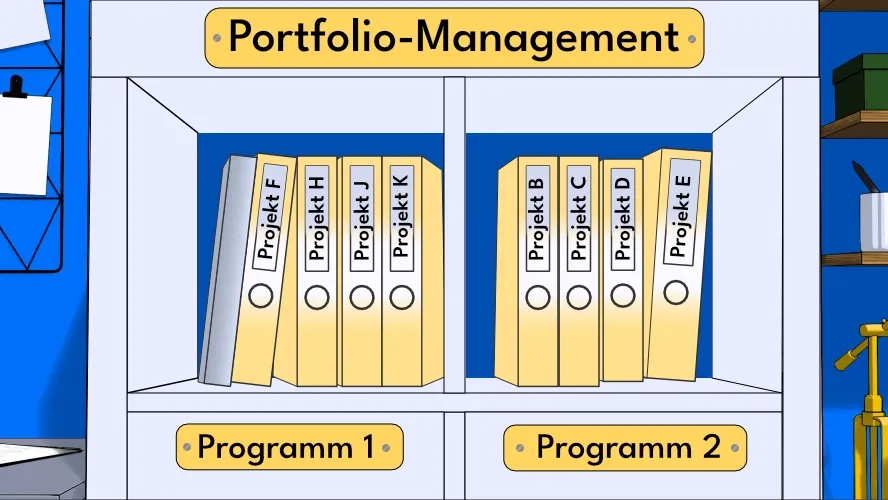
PPM deals with projects and programs. Programs are groups of projects that pursue the same substantive goals. It is quite common for competing projects and programs to exist within a company.
Consider an organization where 30 projects run in parallel. Assume that without PPM, many of these are isolated initiatives that are neither aligned with the company’s strategic goals nor with each other. With PPM, we can categorize these projects, discontinue some, and prioritize others.
PPM is not supported by most project management tools; instead, there are specialized solutions for it. Likewise, a PPM tool is generally less suited for managing individual projects. Project portfolio management also does not consider the process models used in individual projects, such as the waterfall model, V-Model, or agile approaches, and does not concern itself with specific project management methods.
Why Is PPM Especially Important for Technical Projects?
Technical projects differ from other projects through their complexity, their dependencies, and the specialized resources they require. Here are three reasons why PPM is indispensable for technical projects:
Technical Projects Are Complex
Technical projects often involve numerous teams, systems, and technologies. A delay in one project can have impacts on many others.
An example: Imagine one team working on a new app while another team works on the backend infrastructure. If the backend isn’t finished on time, the app can’t be launched. PPM helps you identify such dependencies and resolve them early.
Resources Are Limited
Specialized developers, data scientists, or engineers are often in short supply. Without PPM, there is a risk that these valuable resources will be overwhelmed. With a clear portfolio strategy, you can ensure that these experts focus their energy on the projects that create the greatest value.
Strategic Alignment Is Critical
Technical projects often involve high costs and long timelines. PPM ensures that your team works on projects that support your strategic business goals — and not on projects that only waste time and money.
How Does Project Portfolio Management Work?
PPM is a structured process consisting of five main steps:
Step 1: Project Evaluation
The first step in PPM is to evaluate all potential projects. For this, you should establish clear criteria such as:
- Strategic relevance: Does the project support the long-term goals of your organization?
- Economic viability: What ROI do you expect?
- Resource requirements: Do you have the necessary capacity?
- Risk: How likely is the project to fail?
- Urgency: Are there time-related dependencies?
A proven tool in this phase is the scoring method, where each project receives points for the various criteria. This helps you compare projects objectively.
Step 2: Prioritization and Selection
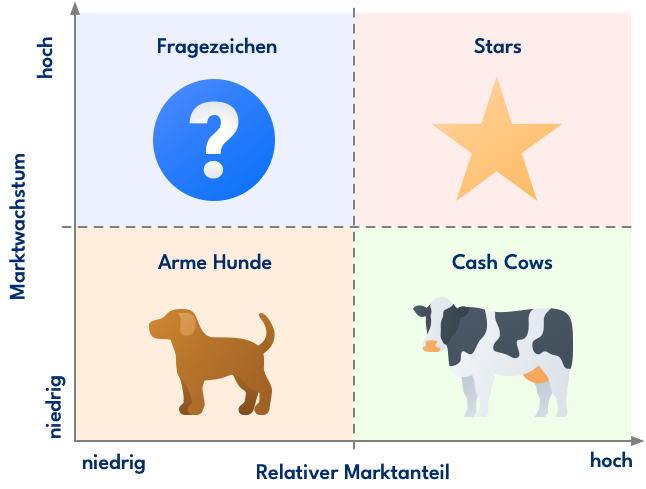
Not every project deserves to be executed. Therefore, you prioritize projects according to their value and strategic relevance. A popular method is creating a portfolio matrix that categorizes projects by value and risk.
Example:
- High value, low risk: Implement immediately.
- High value, high risk: Plan carefully.
- Low value, low risk: Can wait.
- Low value, high risk: Eliminate.
Alternatively, you can use the market-oriented view of the Boston Consulting Group, as shown in the figure.
Step 3: Resource Management
Once priorities are set, you plan how to best deploy your resources. This includes capacity planning to avoid overloading. A popular model is resource balancing, where capacities are distributed evenly across projects. Another goal is to avoid multitasking in projects.
Step 4: Monitoring and Adjustment
PPM is not a static process. Regular reviews are essential to ensure your projects stay on track. A good dashboard that provides real-time data is invaluable here.
Step 5: Communication and Stakeholder Management
Often overlooked but critical: All participants must be on the same page. Regular updates and clear communication create transparency and trust.
What Methods Exist for Project Portfolio Management?
Choosing the right method is crucial for the success of your project portfolio. Each method offers specific advantages and is suited to particular situations, teams, or industries. Here is a comprehensive overview of the most common methods that will help you manage your portfolio efficiently.
Agile Portfolio Planning
Agile portfolio planning originates from software development and has since expanded into many other areas. It is especially suited for companies operating in a dynamic environment where requirements change quickly.
How does it work?
- Projects are divided into smaller work units (e.g., epics and user stories).
- Teams work iteratively and incrementally, with regular reviews (sprints or iterations).
- Portfolio planning occurs in short cycles, often quarterly.
- The focus is on flexibility and the ability to respond quickly to changes.
Advantages
- Flexibility with changing requirements.
- Promotes collaboration and continuous feedback.
- Better real-time visibility of progress.
When is this method suitable?
- When projects have unclear or rapidly changing requirements.
- For teams that work agilely and need rapid adjustments.
Waterfall Model
The waterfall model is one of the oldest methods in project management and is characterized by a linear and sequential structure. It is excellently suited for projects with clearly defined requirements and goals but is not specifically designed for PPM.
How does it work?
- Projects are divided into phases that are completed sequentially (e.g., planning, design, development, testing, implementation).
- Each phase must be completed before the next begins.
- Changes during the project are difficult to implement.
Advantages
- Clearly defined milestones and phases.
- Well suited for projects with fixed budgets and timeframes.
- Easy to document and monitor.
When is this method suitable?
- For technical projects with clear requirements (e.g., infrastructure projects).
- When a high degree of control and documentation is required.
OKRs (Objectives and Key Results)
OKRs are a popular framework for connecting strategic goals with measurable results. Originally developed by Intel, it was later adopted by companies like Google.
How does it work?
- Objectives (Goals): You define what you want to achieve.
- Key Results: You specify how you will measure progress.
- OKRs are reviewed and adjusted in regular cycles (e.g., quarterly).
- Projects and initiatives in the portfolio are aligned with the established goals.
Advantages
- Clear connection between corporate strategy and projects.
- Promotes transparency and accountability.
- Enables teams to focus on what matters most.
When is this method suitable?
- When you want to ensure that all projects directly contribute to achieving business goals.
- For organizations that want to foster a culture of transparency and goal orientation.
Lean Portfolio Management
Lean Portfolio Management is a method from the lean management philosophy. It focuses on avoiding waste and maximizing value for the customer.
How does it work?
- Projects are prioritized based on their value to the customer.
- Resources are dynamically allocated according to current requirements and priorities.
- Continuous reviews check whether projects are still aligned with strategic goals.
Advantages
- Avoids resource waste through strict prioritization.
- High adaptability to changing market conditions.
- Focus on rapid value creation for the customer.
When is this method suitable?
- For companies operating in a competitive environment that need to adapt quickly.
- When minimizing waste is a central part of the corporate philosophy.
Balanced Scorecard
The Balanced Scorecard is a strategic management tool that helps align projects in the portfolio with the long-term goals and vision of the organization.
How does it work?
- Projects are evaluated across four perspectives: finance, customers, internal processes, learning and development.
- Each perspective receives specific metrics to measure progress.
- Projects in the portfolio are prioritized to optimally support the overall strategy.
Advantages
- Holistic approach that considers both financial and non-financial goals.
- Promotes a balanced portfolio combining long-term and short-term objectives.
- Provides a clear framework for monitoring progress at a strategic level.
When is this method suitable?
- For larger organizations with complex structures and diverse goals.
- When a clear connection between operational projects and the corporate vision is needed.
Value Stream Mapping
This method comes from the lean philosophy and focuses on optimizing the flow of value streams within a portfolio.
How does it work?
- You analyze the entire value chain (e.g., from project start to completion).
- Identify bottlenecks and inefficient processes.
- Optimize resource allocation to maximize value flow.
Advantages
- Identifies bottlenecks and waste.
- Increases the efficiency and effectiveness of the portfolio.
- Promotes a clear focus on customer value.
When is this method suitable?
- For companies that want to continuously improve their processes.
- When resources should be optimally deployed along the entire value chain.
Six Sigma
Six Sigma is a data-driven method focused on improving the quality and efficiency of projects.
How does it work?
- You use statistical analyses to identify weaknesses in projects.
- Projects that offer the greatest quality improvement are prioritized.
- Regular reviews ensure that targeted improvements are achieved.
Advantages
- Promotes data-based decision-making.
- Reduces errors and increases quality.
- Provides measurable improvements in project management.
When is this method suitable?
- For organizations that place great value on quality assurance.
- When data and analyses are already a central part of decision-making.
The choice of the right method for project portfolio management depends on your organization, your goals, and the nature of your projects. In many cases, a combination of several methods — for example, Agile for flexibility and OKRs for goal orientation — can deliver the best results. Experiment and find out what works best for your team and your projects.
What Tools Are Available for PPM?
Modern technologies make PPM significantly easier. Here are some of the best tools and methods that can help you:
- Jira Portfolio: Especially suited for agile teams. It provides an overview of progress and dependencies.
- Microsoft Project: A classic for comprehensive planning and visualization.
- Asana: Ideal for smaller teams that prefer simple and clear solutions.
- Monday.com: A user-friendly platform for project overviews.
- Smartsheet: Combines project management with spreadsheet functionality.
What Benefits Does PPM Offer Project Managers?
Introducing PPM brings a wide range of benefits:
1. Better Decisions
PPM provides you with the data you need to objectively evaluate projects and set priorities. Instead of deciding by gut feeling, you have clear facts.
2. More Efficient Resource Utilization
Through targeted planning, you avoid overloading and ensure that your resources are used effectively. No team is overwhelmed, and all projects receive the attention they deserve.
3. Higher Success Rate
With PPM, you maintain an overview and minimize the risk of project failures. Studies show that organizations with effective PPM successfully complete up to 40% more projects.
4. Greater Transparency
PPM creates clear insights into project status. This helps not only you but also your stakeholders develop trust in the process.
What Challenges Exist When Introducing PPM?
Introducing PPM is not a self-starter. Here are the most common challenges — and how to overcome them:
1. Resistance Within the Team
Some team members might see PPM as additional bureaucracy. To prevent this, explain from the start how PPM makes their work easier.
2. Data Quality
PPM is only as good as the data it’s based on. Invest in systems and processes that deliver reliable data.
3. Integration into Existing Processes
PPM should complement your existing processes, not replace them. Start with a pilot project and build from there.
How Do I Get Started with PPM in My Organization?
Getting started with PPM doesn’t have to be complicated. Here is a simple roadmap:
Step 1: Start a Pilot Project
Select a smaller project portfolio to test the PPM system.
Step 2: Involve Stakeholders
Ensure that all relevant people — from executives to team leaders — understand the benefits of PPM.
Step 3: Collect Data
Gather all necessary data about your projects, resources, and priorities.
Step 4: Select Tools
Find a tool that fits your organization and train your team on it.
Step 5: Measure Success
Demonstrate quick wins to promote acceptance and motivation.
Summary
Project portfolio management is not a luxury but a necessity — especially for organizations with complex and technical projects. It helps you maintain an overview, make strategic decisions, and optimally utilize your resources.
If you want to take the first step, start with a small pilot initiative. The insights you gain will lay the foundation for a sustainable PPM strategy.
Call to Action: Want to know how to implement PPM in your organization? Download our free checklist or contact us for an initial consultation.
Frequently Asked Questions
What is a Kanban board?
A Kanban board is a visual tool that represents workflows in columns like ‘To Do,’ ‘In Progress,’ and ‘Done.’ It helps organize tasks, monitor progress, and identify bottlenecks early.
How does a Kanban board work?
A Kanban board is based on three principles: visualization of work, limiting parallel tasks (WIP limits), and optimizing workflow. Tasks are moved from one column to the next until they are completed.
What is a Kanban board used for?
A Kanban board is used to organize tasks in projects and track progress. It is suitable for software development, IT operations, product development, as well as marketing and HR management.
What advantages does a Kanban board offer?
A Kanban board improves transparency, promotes efficiency, helps with prioritization, and enables better team communication. It also supports continuous optimization of workflows.
Which tools are suitable for Kanban?
Digital tools like Trello, Jira, Monday.com, and Allegra are excellent for Kanban boards. For small teams, physical boards with sticky notes can be a simple and effective alternative.

Christoph Friedrich
CEO Alltena GmbH
Christoph Friedrich is a computer scientist and certified Project Management Professional. He has extensive experience in the introduction and integration of project management tools as well as the analysis and definition of processes in project and service management.