In the world of digital work, many terms are tossed around: ticket system, helpdesk software, servicedesk software, and issue tracking system. At first glance, they all seem to do the same thing — namely, manage tasks. In reality, however, these systems differ significantly in purpose, feature set, and area of application. This article explains the differences and helps you find the right system for your team.
What Is a Ticket System?
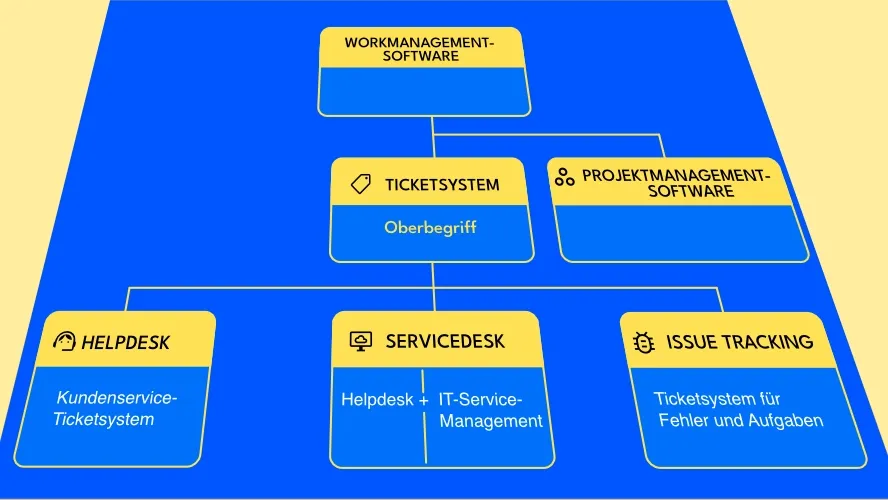
A ticket system is the foundation of all the variants mentioned above. Its purpose is to capture tasks, requests, or problems in so-called tickets and process them systematically. Each ticket contains information such as title, description, priority, processing status, and responsible person.
Typical features:
-
Ticket creation via email, web form, or API
-
Status and priority management
-
Commenting and history tracking
-
Automatic notifications
Example: A customer reports a problem via email. The system automatically creates a ticket, assigns it to a support agent, and documents the processing until the issue is resolved.
The ticket system is the technical foundation for structured task management — whether in support, IT, or a project team.
Helpdesk Software — The Customer Service Focus
Helpdesk software is a specialized ticket system for external customer support. The focus here is on direct contact between customers and the support team.
Typical features:
-
Multichannel support (email, chat, phone, social media)
-
Knowledge base and FAQ section
-
SLA management (response and resolution times)
-
Automated workflows and escalation rules
-
Customer satisfaction measurement (CSAT surveys)
Goal: Resolve customer issues quickly, transparently, and traceably.
Examples: Allegra Service, Freshdesk, Zendesk.
Helpdesk systems optimize customer support — they help teams respond better to requests and strengthen customer loyalty.
Servicedesk Software — The ITIL Standard
Servicedesk software goes beyond the traditional helpdesk. It follows the ITIL framework (IT Infrastructure Library) and covers not only incident management but the entire IT service lifecycle.
Typical features:
-
Incident, problem, change, and request management
-
Service catalog (e.g., “Order a laptop,” “Request access”)
-
Role and permission management
-
Integration with asset and configuration management
-
Reporting and SLA monitoring
Goal: Holistic IT service management — from the request through to the delivery and control of IT services.
Examples: Allegra, ServiceNow, Jira Service Management.
The servicedesk is the strategic successor to the helpdesk — it approaches support processes holistically and in a process-oriented manner.
Issue Tracking System — The Developer’s Tool
An issue tracking system is used to manage technical bugs, tasks, or feature requests in software development.
Typical features:
-
Capturing and classifying bugs and issues
-
Integration with code repositories (Git, SVN)
-
Sprint and backlog management (agile methodologies)
-
Reproduction steps and severity classification
-
Release and version tracking
Goal: Clean tracking and prioritization of development tasks — from bug reports to resolution.
Examples: Allegra, Jira, GitLab Issues.
Issue tracking is the specialized ticket system for development teams — with a focus on software quality and version management.
Comparison: Ticket System vs. Helpdesk vs. Servicedesk vs. Issue Tracking
| Category | Focus | Primary Users | Typical Features | Examples |
|---|---|---|---|---|
| Ticket System | General task management | All teams | Ticket creation, status, workflows | Allegra, OTRS |
| Helpdesk | Customer support | Support teams | SLA, knowledge base, multichannel | Zendesk, Allegra Helpdesk |
| Servicedesk | IT service management | IT departments | Incident, change, asset management | ServiceNow, Allegra |
| Issue Tracking | Software development | Development teams | Bug tracking, backlog, repositories | Jira, GitLab Issues |
When Do I Need Which System?
Helpdesk: When you handle customer inquiries and want to measure service quality.
Servicedesk: When you need to map complex IT or service processes according to ITIL.
Issue Tracking: When you develop software and need to manage bugs systematically.
Ticket System: When you need a flexible, centralized task management solution for multiple teams.
Practical tip:
Many modern tools — such as Allegra — combine these functions in a single platform. This allows you to manage tickets, projects, and services together.
Summary
All four systems are based on the same idea: Structured processing of tasks or requests. The differences lie in purpose, target audience, and process depth.
-
The ticket system is the foundation.
-
The helpdesk focuses on customer service.
-
The servicedesk integrates IT services and processes.
-
The issue tracking system optimizes software development.
Note: If you’d like to learn how to combine multiple approaches in a single tool, take a look at Allegra — a software that unites project management, helpdesk, and servicedesk in one solution.
Frequently Asked Questions
What is work management?
Work management refers to the structured planning, control, and tracking of tasks, requests, and projects across teams. The goal is to create transparency around workloads, priorities, responsibilities, and progress — often supported by software with workflows, automations, and reporting.
What is a ticket system?
A ticket system captures and organizes requests, incidents, or tasks as tickets. Each ticket typically includes status, priority, assignee, history, and deadlines, ensuring that processing and communication remain traceable.
What is a servicedesk and how does it differ from a helpdesk?
A servicedesk is the central point of contact for IT services and is often aligned with ITIL practices (e.g., incident, service request, and problem management). A helpdesk is usually more narrowly focused, primarily on support and incident resolution. In practice, however, the terms are often used interchangeably.
What does issue tracking mean?
Issue tracking refers to capturing, prioritizing, and following up on problems, bugs, tasks, or improvements — typically in software development or technical teams. Issues are usually processed and documented through workflows (e.g., Open, In Progress, Review, Done).
What types of tickets exist in a servicedesk?
Common ticket types include Incidents (disruptions), Service Requests (service inquiries), Problems (root cause analysis of recurring incidents), and Changes (modifications to systems/services). Many tools also allow custom categories such as onboarding, access requests, or hardware orders.
How do incidents, service requests, and problems differ?
An incident is an unplanned interruption or quality degradation of a service that must be restored quickly. A service request is a standardized inquiry (e.g., password reset, new access). A problem aims to permanently resolve the underlying cause of one or more incidents.
What are SLAs and why are they important?
SLAs (Service Level Agreements) define binding targets such as response and resolution times, availability, or support hours. They create clear expectations, facilitate prioritization, and enable measurable quality management through KPIs and reports.
What features should a good ticket system have?
Important features include flexible workflows, automations (routing, escalations), prioritization, SLAs, knowledge base, omnichannel intake (email, portal, chat), roles/permissions, integrations (e.g., monitoring, IAM), as well as reporting and audit trails.
How should tickets be prioritized effectively?
A proven approach is prioritization based on impact and urgency. This produces priority levels with clear SLAs. Additionally, categories, affected services, customers/teams, and dependencies help identify bottlenecks and risks early on.
When is a service portal worthwhile for the servicedesk?
A service portal is worthwhile when many recurring requests need to be standardized: forms, approval processes, self-service, and knowledge articles reduce ticket volume and speed up processing. At the same time, a portal improves transparency for requesters (status, updates, history).
What is the difference between work management and project management?
Project management focuses on time-limited endeavors with clear goals, milestones, and resource planning. Work management goes beyond this to encompass the day-to-day operational workflow (tasks, tickets, requests), including team capacities, priorities, and recurring processes.
How are issue tracking and servicedesk related?
A servicedesk receives requests and incidents and ensures they are processed and communicated. Issue tracking is often used to hand off technical root causes, bugs, or improvements in a structured way to specialized or dev teams. Integrations connect both worlds so that status and context remain consistent.

Jörg Friedrich
Senior Advisor
Jörg Friedrich is the original author of the project management software Allegra and continues to accompany its development to this day. He has many years of industry experience as a project and department manager. He also serves as a professor in the Faculty of Computer Science and Information Technology at Esslingen University of Applied Sciences.