Whether in aerospace, medical technology, automation, robotics, electrical engineering, or automotive: safety functions that were previously implemented electromechanically are being replaced by sensors, actuators, and microcontrollers. Embedded software helps with coordination and control. Programmers in this field must adhere to standards and safety regulations — in other words, embedded software must be developed in compliance with safety standards. To do so, they need appropriate processes and tools.
Developing Embedded Software in Compliance with Safety Standards
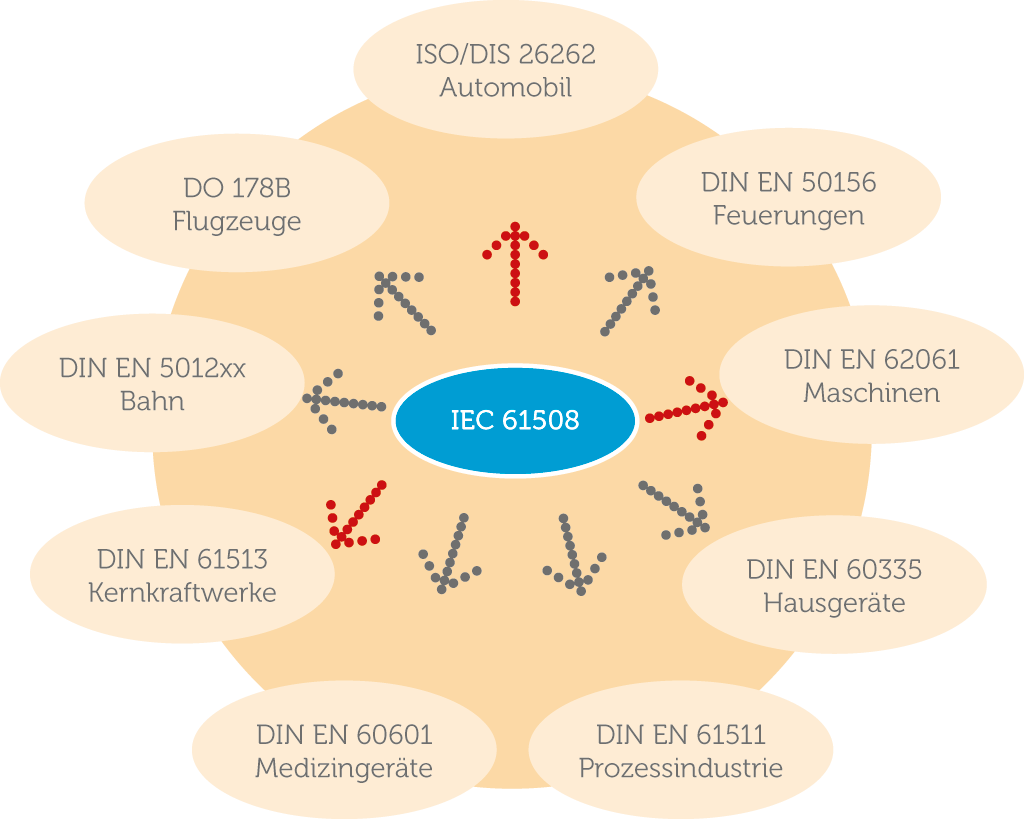
The fundamental standard for the development of safety-critical, programmable electronic systems is IEC 61508, dating from 1998. It covers the entire product lifecycle — from conception through development, commissioning, and modification, all the way to decommissioning. As part of a risk analysis, the Safety Integrity Level (SIL 1 to SIL 4) is determined in order to establish which measures are required. Part 3 of IEC 61508 maps the software lifecycle and proposes techniques and procedures for the design and documentation of safety-relevant modules. This application-independent base standard is complemented by numerous standards for specific application domains. In the automotive industry, for example, ISO 26262 (“Road vehicles — Functional Safety”) is the authoritative standard for safety-relevant electronic systems in motor vehicles.
Safety standards play a key role in the context of requirements engineering:
- The standards include requirements for requirements management, particularly in the area of traceability.
- Standards themselves are to be treated as requirements and must be incorporated into traceability.
Appropriate Requirements Management Tools
If a product is to be used in areas where human safety is a significant concern, ALM (Application Lifecycle Management) products are mandatory. Some of these offer automated traceability analyses and automated project documentation, as well as integrated features that allow developers to verify whether the product meets all specified requirements.
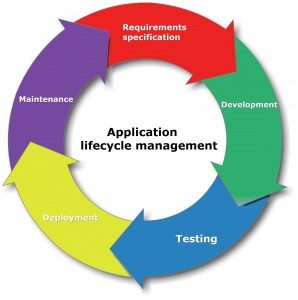
ALM tools that ensure compliance with these standards include, for example, ready-made templates for tracking ASIL levels and RPNs (Risk Priority Numbers), as well as for tracking safety objectives, types, and complexity. They also provide support for the V-Model (as well as the waterfall model, agile methods, and hybrid approaches) to ensure the development of safely integrated systems up to ASIL Level D or SIL Level 3.
Even with appropriate requirements management tools such as ALM tools, safety-critical projects ultimately always require knowledge and experience!

Editor and Writer
Gabriella Martin is a Yale University graduate and holds a Master's degree in German Literature from the University of Tübingen. She loves explaining complex things in simple terms.