Project documentation may not be the most popular part of project management, but it is the foundation of successful projects.
From the planning phase through creating the project schedule to the ongoing management of tasks and teams, documenting your project ensures that all stakeholders are on the same page regarding goals, requirements, deliverables, and resources.
Project documentation also makes every aspect of your project fully traceable. That clarity, in turn, helps you easily identify obstacles or delays during the controlling phase.
But how should you approach project documentation? In the guide below, you will learn about the key benefits of project documentation, the most important tips for project documentation, and examples of the essential project documents you should create.
What is Project Documentation?
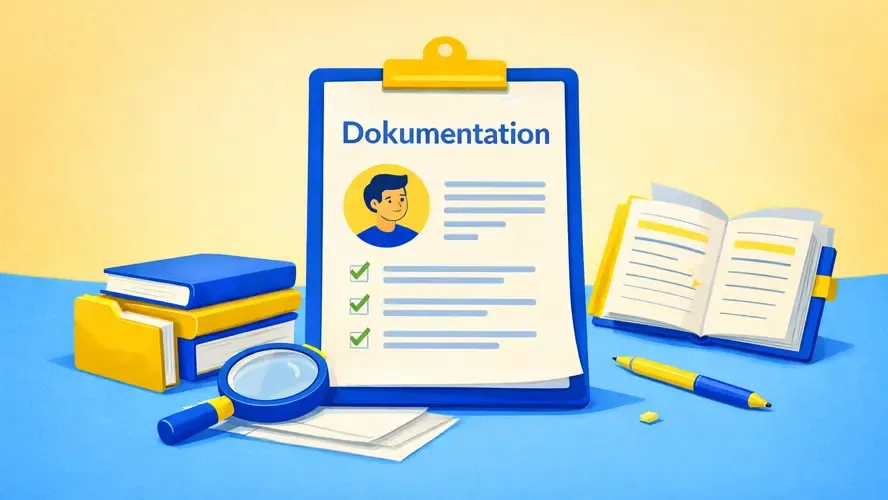
Project documentation is the process of creating, organizing, and managing a collection of key documents that you need to run a project successfully and to report progress to clients and leadership.
Project documentation also refers to the output of that documentation process — the project documents themselves.
The project documentation process should begin at the start of the project and continue throughout its entire lifecycle, recording not only key information but also any changes that occur.
Although project managers are responsible for overseeing this process, project documents are created in collaboration with the project team and other key stakeholders.
Once archived, the documents from a recently completed project can be used to optimize the planning and execution processes for future projects.
Document or Scrap of Paper?
In your projects, draw a clear distinction between informal notes and actual documents. Over the course of a project, many written pieces and presentations are produced. For these to qualify as part of the project documentation, they must contain a minimum amount of metadata. That minimum is:
- a unique identifier, e.g. SYSANF-123
- a title
- an author or owner
- a publication date
- a version number
- a status, e.g. “in progress,” “approved,” “withdrawn”
If any of these attributes is missing, the piece is a note — even if it runs to 120 slides or 178 pages. Notes can be useful in the moment, but you cannot rely on them. Especially at the beginning of a project, many such notes are produced in many variants. They do not belong to the project documentation.
Why Should You Document Your Projects?
A rigorous project documentation process offers numerous benefits, including:
- Clearly defining and establishing goals, requirements, and the baseline situation, so that all stakeholders share the same expectations for a project
- Turning the key project documents into a detailed work breakdown structure (WBS) that lets you create realistic project schedules
- Gaining a comprehensive overview of project progress and keeping all stakeholders informed about the current state of the project
- Improving the traceability of the project workflow and seeing at a glance which tasks need to be completed by when, and who is responsible for them
- Improving communication and collaboration within teams and — in a matrix organization — also between the project level and the functional level, while minimizing misunderstandings
- Accelerating employee onboarding by giving new team members access to all the knowledge recorded in past and ongoing projects
- Being well prepared to mitigate potential risks or resolve issues that may arise during the execution of your project
- Evaluating team performance after a project is completed and identifying lessons learned and possible improvements
How to Document a Project
Want to know how to keep your project documentation up to date from day one? Here are 3 useful tips to help you create well-written, relevant, and current project documents that your team can easily access and use when needed:
Store Important Project Documents in One Place
Nobody enjoys a treasure hunt for project-related information scattered across Slack channels, chats, emails, and shared drives. A good project management solution lets you consolidate all project documents in a single location. This saves you and your team a great deal of time and helps you keep important information organized and accessible.
Keep Your Project Documentation Concise
How often have you come across a project document that goes on for miles, that nobody wants to read, and that sits in an archived folder? The golden rule when creating project documents is to write down only what is necessary while keeping the target audience in mind. After all, these documents are part of the knowledge management process in your organization — they must serve as a reference point for future projects.
Use Visual Representations Wherever Possible
Readers of a document want to grasp its core messages as quickly as possible. This is especially easy with the help of graphical formats, such as a Gantt chart, a milestone trend analysis, or the earned value method.
Set Regular Reminders to Update Documents
In most cases, project managers have at least a dozen things to keep track of — not counting documentation updates. It is therefore best to schedule a fixed time for updating project documents so they stay current throughout the project. You can also make documentation maintenance a team task by giving stakeholders the ability to make updates when changes occur.
Examples of Project Documents

Project documentation varies depending on the industry, company size, and type of project.
Nevertheless, based on the five project management phases, we have compiled the most important project documents you need to create during each phase of your project:
1. Project Documents at the Start
- Project proposal: The purpose of this project document is to outline the scope, purpose, and objectives of a proposed project and to convince stakeholders that it is worth investing time and resources in it. If the project is approved, the project proposal serves as the starting point for initiating the project.
- Project business case: The business case justifies the investment in a specific project and presents the associated benefits, costs, and risks. The project sponsor and key stakeholders must review and approve the business case before a project can begin.
- Project charter: The project charter addresses high-level project planning. This project document contains a brief description of the project objectives, scope, key deliverables, team roles and responsibilities, budget, potential risks, and constraints. It also authorizes the start of a project and serves as the foundation for your project plan.
At this stage, it is advisable to capture the desired project outcome in a requirements specification. Later, the requirements specification can be supplemented with a functional specification.
2. Project Planning Documents
- Project plan: The project plan serves as the detailed roadmap for your project. It defines the main objectives, project scope requirements, resources, risks, quality criteria, and the roles and responsibilities of stakeholders, while scheduling tasks, key milestones, and deliverables in a timeline. The primary function of this project document is to guide project execution and facilitate communication among project stakeholders.
- Work breakdown structure (WBS): The work breakdown structure (WBS) helps you map a project hierarchically and determine the phases, deliverables, and tasks required to achieve the project objectives. The WBS is the first step in creating a project plan, enabling you to allocate resources efficiently and identify dependencies between tasks.
3. Project Execution Documents
- Project status report: Regular status reports keep relevant stakeholders informed about progress to date and the planned next steps.
- Project communication plan: The communication plan describes how the project manager and project team will communicate throughout the project. This project document should include the communication methods used, the frequency of information exchange within the team or with other stakeholders, and contact information.
- Risk and issue log: This is an essential risk management tool for identifying and tracking obstacles within a project and other potential problems that could negatively affect the execution of the project. Project managers use this log to prioritize issues, determine the actions required to resolve each issue quickly, assign a team member to handle it, and monitor the status of the issue until it is resolved.
4. Project Controlling Documents
- Change request management: This document records changes to the originally agreed project scope. Every change should be captured here, specifying what the change is, who requested it, why it was requested, how it affects other areas of the project (budget, schedule, etc.), and how much it will cost to implement. After the proposed changes have been reviewed, they can be approved and carried out, or rejected.
5. Project Closure Documents
- Project closure document: This document’s purpose is to formally close a project. Also known as a project review document, it contains a project overview with information on scope, budget, deliverables, schedule, and lessons learned. Using this report, project managers and other key stakeholders can assess whether the project’s performance meets the original objectives and whether the results meet the previously defined quality expectations.
In addition to the documents mentioned above, agendas and meeting minutes are also part of the project documentation. While agendas define what will be discussed in a project meeting and who will attend, the minutes record what was decided as a result of the meeting.
Managing Project Documentation with Allegra
The sheer volume of paperwork you need to organize and manage from the start of a project to the delivery deadline can feel overwhelming.
That is why it is best to use a project management tool like Allegra that helps you manage all documents from one project phase to the next in a single place — while keeping all stakeholders in the loop.
Allegra’s Enterprise plan includes the Wiki perspective, which lets you collaboratively create project documents such as agendas, meeting minutes, and notes and share them with your team, leadership, or clients.
A wiki can handle the most common document creation tasks just like any other word processor — supporting images, tables, text styling (bold, italic, and underlined), headings, code blocks, and ordered and unordered lists. You can also switch between inline editing of a single document section and full editing mode, where you can see the entire document at a glance.
Wiki documents can be easily exported to Word documents using Word templates, or to PDF documents using LaTeX templates, allowing you to effortlessly create documents with a clean and attractive layout. You can also organize your collection of wiki documents in folders for each workspace to make access easier. Once the project is complete, you can archive everything with just a few clicks.
Want to put Allegra to the test? Start your 30-day trial today and optimize your project documentation.
Further Project Documentation
Many document types arise from process reference models or procedural models. The following articles deal with such models and the associated document types.
- Top 10 Project Management Certifications 2024
- The Waterfall Model: Definition, Advantages, and Disadvantages
- Project Management Knowledge — Concise and to the Point
- The Role of the Project Manager
- The PRINCE2 Method: What a Project Manager Needs to Know
- Project Management Standards Compared
- Requirements Engineering and Safety Standards

Editor and Writer
Gabriella Martin is a Yale University graduate and holds a Master's degree in German Literature from the University of Tübingen. She loves explaining complex things in simple terms.