PRINCE2 is one of the best-known project management methods and is frequently used in highly structured project environments. PRINCE2 helps you manage projects more professionally, more transparently, and with less stress — even if you only apply individual principles from it. It offers
- Clear structure instead of chaos: PRINCE2 gives you a clear framework that helps you plan and control projects cleanly from start to finish. You always know where you stand and what comes next.
- Better decisions: The method places great emphasis on clear roles, responsibilities, and regular decision-making. This makes coordination easier and reduces misunderstandings.
- Practical and flexible: Even though PRINCE2 appears highly structured, it adapts well to different project sizes, teams, and industries. You can pick exactly what makes sense for your project.
- A common language in the project: When everyone knows PRINCE2, the team, stakeholders, and management all speak the same “project language.” This enormously simplifies communication and collaboration.
- Career advantage: PRINCE2 is internationally known and recognized. A basic understanding or certification can strengthen your profile and open up new professional opportunities.
What Is the PRINCE2 Method?
PRojects In a Controlled Environments — or PRINCE2 — is one of the most widely used project management methods in the world. It is flexible enough that organizations of all kinds and projects of virtually any type, size, and industry can use it profitably.
The processes of PRINCE2 are clearly aligned with classic project management phases, which creates a high degree of transparency throughout the project. In this respect, PRINCE2 follows a classic waterfall model. It therefore sits closer to the traditional project management approach than to agile methods.
Originally developed in 1989 by the Central Computer and Telecommunications Agency (CCTA) for the British government, the PRINCE2 method is now widely known and used by project teams in more than 150 countries.
The success of PRINCE2 is based on its 7 principles (why), processes (how), and themes (what). These elements make it easier for project managers to deliver their projects on time and on budget.
The 7 Principles of the PRINCE2 Method
The core principles of PRINCE2 form the foundation on which every project rests. These fundamentals are non-negotiable. Your own approach should be measured against these principles on a regular basis and corrected if necessary. Here are the 7 principles:
1. Projects must have a continuous business justification.
Every project must have a clear business purpose and a practical benefit that outweighs the estimated costs and potential risks. This avoids wasting resources and keeps the project owners on track.
2. The project team must learn from experience.
Team members must document their experiences in a form that makes them easy to use for subsequent projects. This makes the difference between those who have twelve times one year of experience and those who have twelve years of experience.
3. Roles and responsibilities must be clearly defined.
Everyone involved in a project must know from the outset what is expected of them and what they can expect from others. Roles and assigned responsibilities are documented, for example, in a project manual.
4. Work must be divided into manageable stages.
The project manager divides the work into stages separated by reviews. In these reviews, the project manager and the project sponsor assess progress and document all lessons learned during the current stage. Only then does the project move into the next stage.
5. The project board (sponsor) should intervene only in exceptional cases.
When the project is on track and everything is going well, the project sponsor stays in the background. However, they will step in to advise and decide when problems arise that affect the project requirements (time, cost, scope, etc.). Such a situation should be the exception.
6. Projects should focus on the quality of delivered products.
Before actual work begins, a detailed product description must be in place that defines clear quality criteria for each (intermediate) product. Behind this lies the experience that quality cannot be achieved at the end of a project through testing or inspection — it must be a continuous concern across all project stages.
7. The project manager should tailor the approach to the needs of the individual project.
Adapting PRINCE2 to the size, complexity, environment, and requirements of a project leads to better results than blindly following the method.
The 7 Processes of the PRINCE2 Method
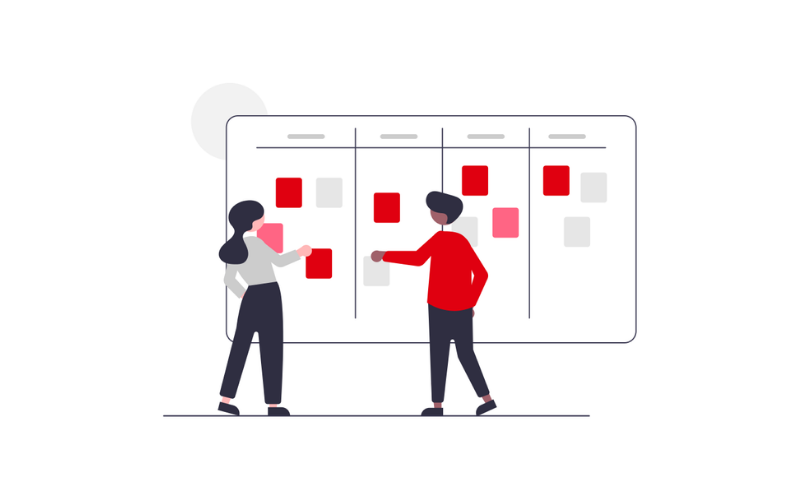
The PRINCE2 framework consists of 7 processes. Each process comprises a series of activities that enable managers to organize, direct, and complete a project on time and within budget.
As mentioned in the section above, you should adapt these processes for each project. In this way, the work will proceed as smoothly and efficiently as possible.
Starting Up a Project
This is the stage in which the organization determines the feasibility of the project.
First, someone submits a project mandate for approval, which briefly describes the business justification for the project.
When the project board approves the mandate, the project manager creates a more detailed project brief. This document contains the business case, the achievable objectives, the resources, the deliverables, and the implementation process. The latter is best captured in a project manual. No later than this point, the project management software to be used should also be decided.
Initiating a Project
The “Initiating a Project” process aims to define the activities required to deliver the products. In other words, it lays the foundation for the project so that everyone involved understands the end goal.
To this end, the project manager creates a project plan covering the 6 key performance targets — time, cost, quality, scope, risk, and benefit. This plan and the Project Initiation Documentation serve as baseline documents that the project board and project manager use to assess progress and deal with any obstacles.
Once the project board has approved the plan and the other initiation documents, work can begin.
Directing a Project
This process enables the project sponsor to be accountable for the project through the decisions they make. In addition, the board sets direction and control and exercises its authority at key moments during the project lifecycle.
To clarify: the activities involved in “Directing a Project” include authorizing the initiation of the project, the project itself, a project stage, and the closure of the project.
Controlling a Stage
The main purpose of this process is for the project manager to assign tasks — or “work packages” — to the project team and team manager. The project manager then monitors the work during each stage and checks the quality of completed work.
In addition, the project manager must report to the project board on progress and review the current status of the stage against the stage plan. If delays or issues arise, they make the necessary adjustments to keep the project on track.
This sequence of activities repeats for each stage of the project until the “Closing a Project” process begins. PRINCE2 places great importance on regular project controlling to detect deviations early.
Managing Product Delivery
This process is designed to ensure that the project is progressing as planned and that the products delivered meet the previously defined expectations.
In this case, the team manager must create a plan that enables the creation and delivery of the products contained in the work packages assigned by the project manager.
The team manager must also verify the quality of these products, obtain board approval, and deliver the completed work packages to the project manager.
Managing a Stage Boundary
This process allows the project board and manager to review each stage of the project with respect to quality and adherence to the original plan. The information gathered helps the project board decide whether to authorize the next stage or shut the project down entirely.
In the meantime, the project manager must document the lessons learned during the current stage in order to improve work in future stages. They are also responsible for updating the project plan and business case, and for planning the next stage.
Closing a Project
The project should have a clear end. This means the team has achieved all objectives and delivers the products to a satisfied customer.
The project manager is responsible for all activities associated with closing a project. These include handing over the products, reviewing overall performance, and requesting that the project board formally close the project.
The 7 Themes of the PRINCE2 Method
The PRINCE2 themes reflect how the project management team applies the principles and addresses them throughout the entire project to keep everything on track. In general, these themes represent areas of knowledge that provide you with the necessary information on specific project management topics.
Here too, you should always tailor the themes to the requirements of the project you are managing.
1. Business Case
The business case contains the information that determines whether a project is feasible, viable, and a worthwhile investment. According to PRINCE2, the project manager creates, maintains, and refers to this document at the end of each project stage.
2. Organization
The project manager must define and record the roles and responsibilities of the members within an organization who are involved in a project.
3. Quality
This theme helps to define and implement a quality control system that ensures products meet requirements and are fit for their intended use.
4. Plans
The information in this theme underscores the fact that every project needs a plan — because failing to plan is planning to fail. In PRINCE2, there are three levels of planning: the project plan (used by the project board), the stage plan (used by the project manager), and the team plan (used by the team manager). Sound project planning is critical to the success of a PRINCE2 project.
5. Risk
The purpose of this theme is to provide the best approach for identifying, assessing, and controlling potential risks during the lifecycle of a project.
6. Change
This theme relates to managing change requests and dealing with issues that may arise during the project. Simply put, the project manager must find an appropriate way to agree on and approve changes before they are implemented.
7. Progress
Tracking project progress is important for monitoring project status against the plan, checking the ongoing viability of the project, and controlling deviations.
What Are the Key Roles in PRINCE2 Project Management?

In the PRINCE2 method, there are three leadership roles: the project manager, the team manager, and the project board. The project board also includes the executive, the senior user, and the senior supplier.
In some cases, additional supporting roles are involved, such as project assurance and project support.
- The Executive: the person who champions the business case and justification for the project, and appoints the project management team, including the senior user, the senior supplier, and the project manager
- The Project Manager: the person who plans, organizes, and controls the project on behalf of the project board, delegates tasks, and manages the project on a day-to-day basis. They create the project manual, which defines the specific approach to the project.
- The Senior User: as the representative of the end users who are directly affected by the products or services delivered at the end of the project, they specify and protect the needs of the users
- The Senior Supplier: the product specialists who provide the necessary expertise to ensure the project uses the right resources and that the delivered products meet quality requirements
- The Team Manager: the leader of the project team, reporting to the project manager, who ensures that the products assigned in the work packages are completed on time
- Project Assurance: the team of people (sometimes the project board takes on this role) who verify that the project is on track from the perspective of business, user, and supplier interests
- Project Support: the team of staff who provide support and advice on project management tools and configuration management, and who also provide administrative services to the project manager on larger projects
The clear assignment of roles is a central element of a functioning project organization and one of the great strengths of PRINCE2.
Why You Should Use the PRINCE2 Method for Your Projects
The key benefits of the PRINCE2 method are:
- Enables the creation of flexible frameworks that meet the requirements of projects of varying size and complexity.
- Ensures that project stakeholders are involved at the right time and in the right place during each project stage.
- Ensures the project maintains a continuous business justification.
- Improves communication between the project team and other key stakeholders.
- Helps you identify and manage potential obstacles you may encounter during a project.
- Includes an efficient process for capturing lessons learned so you can apply this knowledge to future projects.
- Features a well-established system for identifying and managing project deviations from the original plan.
The greatest benefit of implementing PRINCE2 in your organization is that you save time and money while effortlessly running successful projects. This is especially true when you reinforce the methodology with suitable project management tools in your organization.
PRINCE2 Project Management Certification
To obtain PRINCE2 certification, you must first attend training at an accredited training organization, either in a virtual, online, or in-person format. You then need to pass an exam at varying difficulty levels, depending on which certification you choose.
There are 4 levels of certification for PRINCE2:
1. PRINCE2 2017 Foundation
This level gives you the foundational knowledge and understanding of PRINCE2 that you need to work efficiently in a project management team using this method.
2. PRINCE2 2017 Practitioner
The PRINCE2 Practitioner certification confirms that you can implement the PRINCE2 method and adapt it to the needs of specific project scenarios.
3. PRINCE2 Agile Foundation
This certification level gives you the foundational knowledge of PRINCE2 and common agile techniques that you need to work in a project management team that combines both.
4. PRINCE2 Agile Practitioner
The PRINCE2 Agile certification enables you to apply PRINCE2 principles, processes, and themes to a real project in an agile environment.
Want to learn more about project management?
Anyone looking to put PRINCE2 in context should also take a look at the PMBOK guide and the general fundamentals of project management.

CEO Alltena GmbH
Christoph Friedrich is a computer scientist and certified Project Management Professional. He has extensive experience in the introduction and integration of project management tools as well as the analysis and definition of processes in project and service management.