There is no question that digitalization is transforming the workplace. This is especially true for knowledge workers, whose collaboration is a fundamental prerequisite for keeping pace with fast-moving developments. All the more important, then, to stop neglecting the topic of knowledge collaboration and instead give it the strategic priority it deserves.
But what exactly is a “knowledge worker”? At first glance, you might picture think tanks — specialists sitting at their desks drafting concepts. Yet this image has long since been overtaken by the realities of today’s working world. In their Spotlight analysis “Virtual Teams Need Strong Leadership!” commissioned by US software company Citrix, PAC analysts make this clear: knowledge workers today include assembly workers, carpenters, and farmers alike. One hundred and fifty executives from several companies were surveyed for the study.
What does knowledge work actually mean? According to the study’s authors, it is defined by three characteristics:
- It involves a complex task,
- whose completion requires knowledge, creativity, and teamwork, and
- which cannot be handled through predefined routines.
The knowledge and creativity of employees are existential key factors for productivity in organizations today. Yet far too often, the conditions that would foster open exchange and effective communication simply are not in place.
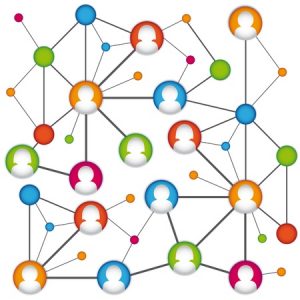
It is precisely communication that determines whether a project succeeds or fails: employees spend more than a third of their working time — 38 percent, according to the study — on communication and cooperation. This holds true for virtual teams as well, which — as the study found — occasionally need to meet in person too. The share of mobile colleagues and home-office arrangements continues to grow. More and more projects require cross-departmental teamwork. The challenges of today can no longer be met without collaboration.
Yet a full half of the decision-makers surveyed consider the conditions for collaboration to be no better than mediocre. This applies to technological, organizational, and cultural conditions alike — even though the market offers mature collaboration tools with great potential. The problem is that these tools are often simply not used to their full capabilities. The result: frustrated employees, dissatisfaction with their employer — and a weakened ability to focus on core tasks.
Before addressing how to improve this situation, it is worth looking at the root causes. Three reasons stood out clearly in the survey:
- Neither performance management systems nor incentive schemes encourage the use of collaboration technologies. This was acknowledged by a high proportion of executives surveyed — forty percent.
- A further reason goes hand in hand with the first: many executives do not actively support the use of appropriate technologies (38 percent of responses), which is also
- linked to bureaucracy and cumbersome procurement processes (37 percent) as well as a conservative corporate culture (32 percent) that makes adopting collaboration tools more difficult.
Conclusion: It is not the technology but the corporate culture that represents the true barrier to effective collaboration within organizations. Germany still struggles a little here. Citrix estimates that only around 25 percent of German companies have adopted such tools — meaning Germany still has some catching up to do in international comparison. Reason enough to take a closer look at the experts’ best practices.
The PAC analysts have summarized their findings in five recommendations that can fundamentally improve virtual collaboration. They all share one thing in common: without a clear commitment from senior leadership, improvement cannot be expected.
Best Practices:
- Improving collaboration is unquestionably a strategic matter. Only with top-level support can the conditions for virtual teamwork be shaped optimally. The same principle that applies to classic process optimization applies here: This topic belongs on the strategic agenda!
- Build trust! Change processes triggered by the introduction of new software solutions generate anxiety and resistance among employees. But when executives successfully lead by example in adopting new technologies, concerns and barriers are quickly dismantled. Leaders set the example!
- Trust is also the key word when it comes to a new understanding of leadership. Executives, the analysts argue, must learn to delegate responsibility and instead focus on clear goals and definitions. Creating a culture of trust works wonders!
- And once more — trust: virtual teams are made up of people who occasionally need to look each other in the eye. Mutual respect within the group and recognition from leadership are just as important in virtual teams as in traditional collaboration. A personal meeting or a video call should occasionally be on the agenda!
- The points above already show that leadership behavior must evolve in the context of virtual collaboration. On one hand, contact with employees must be maintained; on the other hand, responsibility must be delegated. Finding the right balance here demands a high degree of emotional intelligence and sensitivity from leaders. Situational leadership is the way to go!
What about the role of IT when it comes to choosing the right technology? As already mentioned, there is no shortage of capable collaboration tools with great potential. What matters is embedding them properly within the organization. The analysis shows that the decision on technology adoption is increasingly being made not by IT but by the specialist departments. Yet this does not diminish IT’s importance — IT remains an indispensable opinion-former and a decisive factor when it comes to maintenance and security.
Collaboration tools like Allegra also provide a foundation for effective virtual teamwork. The web-based technology of the project and task management software enables real-time collaboration — all teams and employees involved are connected through Allegra, across companies and worldwide.

Further Information
Further information can be found in the articles on project management calendar and collaboration software.

Editor and Writer
Gabriella Martin is a Yale University graduate and holds a Master's degree in German Literature from the University of Tübingen. She loves explaining complex things in simple terms.