The following ten project management best practices help you, as an ambitious and success-focused project manager, to act confidently and effectively at every stage of a project.
Work SMART
The so-called SMART rules will help you successfully deliver a project. SMART is an acronym for:
- Specific
- Measurable
- Accepted
- Realistic
- Time Bound.
Although every project is unique, there are universally applicable rules for project management. Taking these into account is an essential foundation for successful project delivery.
1. Early Communication with All Involved and Affected Parties
Everyone who has a direct or indirect interest in or involvement with the project is part of the so-called stakeholders with a high need for information. One of the most important project management best practices is for project management to ensure comprehensive, up-to-date information is provided to all project participants from the very beginning.

The stakeholder circle is broad, encompassing both internal and external parties. From its own communication, project management can simultaneously derive the expectation that all involved and affected parties engage with — and even identify with — the project. Each of them must receive the same information at the same time. No one should feel disadvantaged or played off against others. A web-based project management system makes this straightforward and practical.
2. Project Sponsors Help and Expect Something in Return
A typical characteristic of project sponsors is their desire to be as well-informed as possible despite limited manpower and presence. Project management should not feel put out by this expectation — rather, it must keep the associated benefits in mind. During a critical phase, an honest answer to the question of how the project would fare without the sponsorship — or whether the project would even exist — can be invaluable.
Sponsors, like patrons, want to be nurtured and kept engaged. When this interplay between project management and the sponsor works well, a potential friction point is eliminated from the outset. On the contrary, the management team gains an advocate on the side of one of the most significant financiers: the sponsor.
3. Risk and Opportunity — Keeping the Worst Case in Mind
Project management does well to periodically envision a scenario other than the currently successful project trajectory. Over a longer project duration, literally anything can happen. The project team is expected to recognize and manage every conceivable situation. The only benchmark is project success. Risk assessment is a constant companion in project monitoring. The project’s client has very few acceptable excuses for failure — comparable to the insurance sector, only war and elemental natural forces such as earthquakes, heavy rainfall, flooding, and the like would qualify.
4. The Work Plan Is More Than a List of Activities
A concretely developed work plan is also the guiding framework for project management. The activities initially listed only come to life through planning. At the same time, the work plan provides a firm structure for project management.
It must neither be undershot nor exceeded. With this awareness, the work plan takes on an eminently important role. Incremental goals are prioritized, interim results defined and identified, and any scope creep — as an unplanned, gradual expansion of scope — is nipped in the bud. What has not been planned need not, and cannot, become part of the project. Figuratively speaking, the work plan participates in project communication.
5. Project Kickoff with a Kick-off Meeting
Kick-off means start or restart. A kick-off meeting has a motivating effect on the project team in every respect. Everyone is together in the meeting, each person is addressed and informed in the same way. The expectations of those involved are high — even eager. What matters is a project language that is clear in every sense of the word. Initial responsibilities and tasks are assigned, and the management team informs everyone about the project goal and the individual steps to get there. Every person present must be given the sense that they belong to the project team and have a firm, responsible place within it.
6. Written Documentation as the Foundation of Successful Project Progress
In agile project management in particular, project documentation is often assigned a secondary role. However, written records of plans, meeting outcomes, interfaces, and similar items are among the most important project management best practices. Project documentation is an essential foundation for ultimate project success. No one can remember everything, and the spoken word is expressed, interpreted, and understood differently by different people. What is written down is unambiguously fixed and can be reviewed at any time. Written documentation is almost a matter of course. What matters is its scope and thoroughness. On one hand, “project bureaucracy” should not be taken too far; on the other, it is absolutely necessary. Only through written records — or their representation in a project management system — can statements be substantiated, work plans, budgets, and other plans be modified and supplemented in a traceable way. And to work through errors that have occurred, the process must be traced back — in other words, reconstructed.
7. Step by Step with Interim Reviews and Controlling
Project communication includes regular reporting on a weekly or biweekly basis, as well as ideally a brief daily standup within the project team. The saying applies here too: trust is good, but control is better. Regular interim reviews provide security on all sides, and a project management system offers transparency. The project team is confirmed in where it stands and whether the schedule is still on track.
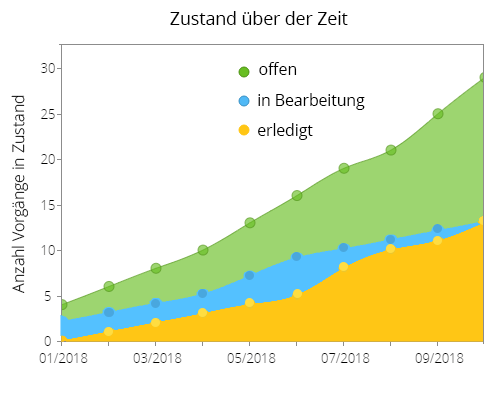
Project leadership needs both interim reviews and controlling as a basis for work and decision-making for the next project step. Until the project goal is reached, the individual phases build on one another seamlessly and without gaps. A missing step throws the entire project off balance. Like a staircase, no step may be skipped or omitted.
8. Feedback as an Important Part of Communication
Active and regular feedback is also one of the project management best practices and is the guarantee that no gaps arise in the project process. Communication must never be one-sided — it must always flow in both directions. When an instruction is given, it must be ensured both that it has been received and that it will be carried out. Nobody is perfect — neither project leadership nor the project team. The tighter and better organized the feedback loop, the more seamless the entire project process.

Furthermore, feedback increases mutual acceptance. Every team member feels taken seriously when their suggestions and ideas are not only heard but also receive a response. Web-based project management software makes communication easier.
9. Sticking to the Work Plan and Avoiding Scope Creep
The decisive project foundation is the existing work plan. Every project is alive, and as such, you must expect activity — both internal and external — throughout its course. Either kind can often have immediate effects on the project. This is where project leadership must take corrective action and hold firmly — not rigidly, but steadfastly — to the work plan. The plan itself can certainly be substantially changed. However, any expansion at the request or directive of stakeholders is a no-go. Only those who drew up the work plan can and may change it. Outside interference must, as it is called, be deflected — naturally, especially toward sponsors, in a polite but firm manner.
10. Project Retrospective and Follow-up
The last of the ten project management best practices presented here concerns the retrospective and follow-up of a project. Every project is divided into three phases: preparation, execution, and follow-up. All phases are indispensable — both in their own right and for the project as a whole. A project is only complete after a thorough retrospective.

This can be structured in various ways. In individual cases, a comprehensive follow-up is helpful — even necessary — with the goal of being able to draw on the experience of the just-completed project for similar future projects. Similar to the kick-off meeting, there should be one final, closing meeting.
Unfortunately, this often falls by the wayside for various reasons. Project staff have since scattered in all directions, or the project budget has been exhausted. To prevent this, the closing meeting should take place as close to the project’s end as possible — true to the principle: after one project ends, the next one begins. In this context, the usefulness of the project management methods employed can also be discussed, and process adjustments derived from that discussion.
Related topics: Project handbook, task administration, task management software

Editor and Writer
Gabriella Martin is a Yale University graduate and holds a Master's degree in German Literature from the University of Tübingen. She loves explaining complex things in simple terms.