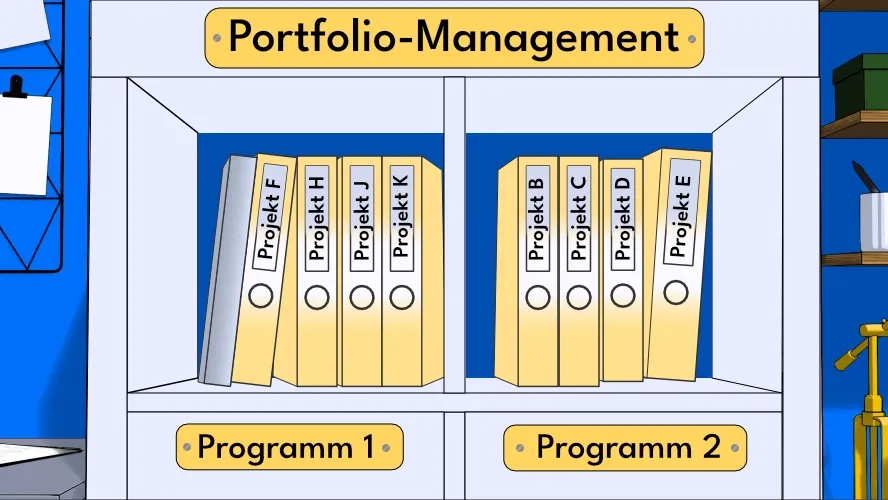
Instead of looking at each project in isolation, project portfolio management (PPM) considers all ongoing and planned projects simultaneously. It helps decide which projects should be started, continued, postponed, or cancelled — so that the organization ultimately achieves the greatest possible benefit.
Multi-project management and the planning of the resources involved concerns you when multiple projects in your organization compete for the available resources in parallel. It helps you prioritize your projects, align them strategically, and ensure that your resources are used efficiently.
This article explains how PPM works, why it matters — especially for technical projects — and how you can introduce it in your organization. Whether you are new to PPM or already have experience, you will gain fresh insights here.
What Is Project Portfolio Management?
Project portfolio management (PPM) is the strategic process of evaluating, prioritizing, and managing multiple projects in order to achieve organizational goals, optimize resources, minimize risks, and maximize overall value.
While classic project management focuses on completing individual projects successfully, PPM asks: “Are we even working on the right projects?”
PPM is the process through which you:
- Analyze all projects in your organization.
- Set priorities.
- Allocate resources strategically.
- Monitor progress and adjust course.
The goal is to ensure that your projects collectively deliver the greatest benefit to your organization.
Project Portfolio Management, Program Management, and Project Management
PPM deals with projects and programs. Programs are groups of projects that pursue the same content-related objectives. It is quite common for an organization to have competing projects and programs.
Consider an organization running 30 projects in parallel. Without PPM, many of them are likely isolated initiatives that are aligned neither with the organization’s strategic goals nor with each other. With PPM, we can categorize these projects, discontinue some, and prioritize others.
PPM is not supported by most software tools for project management; there are specialized solutions for this purpose. Likewise, a PPM tool is generally less suited to managing individual projects. Project portfolio management also does not concern itself with the process models used in individual projects — such as the waterfall model, V-Model, or agile approaches — and does not deal with specific project management methods.
Why Is PPM Especially Important for Technical Projects?
Technical projects differ from other projects in their complexity, their dependencies, and the specialized resources they require. Here are three reasons why PPM is indispensable for technical projects:
Technical Projects Are Complex
Technical projects often involve numerous teams, systems, and technologies. A delay in one project can have a knock-on effect on many others.
An example: imagine one team is building a new app while another team is working on the backend infrastructure. If the backend is not ready on time, the app cannot launch. PPM helps you identify such dependencies and resolve them early.
Resources Are Limited
Specialized developers, data scientists, or engineers are often in short supply. Without PPM, there is a risk that these valuable resources become overloaded. With a clear portfolio strategy, you can ensure that these experts focus their energy on the projects that create the most value.
Strategic Alignment Is Critical
Technical projects often come with high costs and long timelines. PPM ensures that your team is working on projects that support your strategic business goals — and not on projects that merely waste time and money.
How Does Project Portfolio Management Work?
PPM is a structured process consisting of five main steps:
Step 1: Project Evaluation
The first step in PPM is to evaluate all potential projects. To do this, you should define clear criteria, such as:
- Strategic relevance: Does the project support your organization’s long-term goals?
- Economic viability: What ROI do you expect?
- Resource requirements: Do you have the necessary capacity?
- Risk: How likely is the project to fail?
- Urgency: Are there time-based dependencies?
A proven tool at this stage is the scoring method, in which each project receives points for the various criteria. This helps you compare projects objectively.
Step 2: Prioritization and Selection
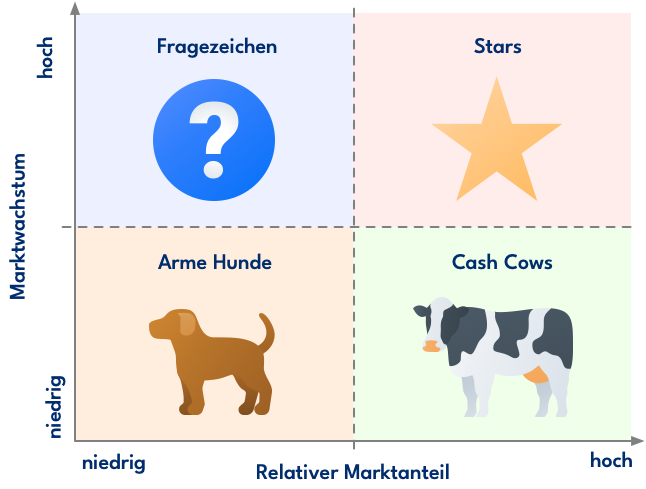
Not every project deserves to be implemented. You therefore prioritize projects according to their value and strategic relevance. A popular approach is to create a portfolio matrix that categorizes projects by value and risk.
Example:
- High value, low risk: Implement immediately.
- High value, high risk: Plan carefully.
- Low value, low risk: Can wait.
- Low value, high risk: Eliminate.
Alternatively, you can apply the market-oriented view of the Boston Consulting Group, as illustrated below.
Step 3: Resource Management
Once priorities have been set, you plan how to deploy your resources most effectively. This includes capacity planning to avoid overloads, and targeted workload management that distributes the workload fairly among team members. A popular model is resource balancing, in which capacity is distributed evenly across projects. Another goal is to avoid multitasking in projects.
Step 4: Monitoring and Adjustment
PPM is not a static process. Regular reviews are essential to ensure your projects stay on track. A good dashboard that provides real-time data is invaluable here. Use project status reports and milestone trend analysis to detect deviations early.
Step 5: Communication and Stakeholder Management
Often overlooked but critical: everyone involved must be on the same page. Regular updates and clear communication create transparency and trust.
What Methods Exist for Project Portfolio Management?
Choosing the right method is decisive for the success of your project portfolio. Each method offers specific advantages and is suited to particular situations, teams, or industries. Here is a comprehensive overview of the most common methods to help you manage your portfolio efficiently.
Agile Portfolio Planning
Agile portfolio planning originated in software development and has since expanded to many other areas. It is particularly well suited to organizations that operate in a dynamic environment where requirements change quickly.
How does it work?
- Projects are broken down into smaller units of work (e.g., epics and user stories).
- Teams work iteratively and incrementally, with regular reviews (sprints or iterations).
- Portfolio planning takes place in short cycles, often quarterly.
- The focus is on flexibility and the ability to respond quickly to change.
Advantages
- Flexibility when requirements change.
- Promotes collaboration and continuous feedback.
- Better visibility of progress in real time.
When is the method suitable?
- When projects have unclear or rapidly changing requirements.
- For teams that work in an agile manner and need quick adaptations.
Waterfall Model
The waterfall model is one of the oldest methods in project management and is characterized by a linear, sequential structure. It is excellent for projects with clearly defined requirements and goals, but is not specifically designed for PPM.
How does it work?
- Projects are divided into phases that are completed one after the other (e.g., planning, design, development, testing, implementation).
- Each phase must be completed before the next one begins.
- Changes during the project are difficult to implement.
Advantages
- Clearly defined milestones and phases.
- Well suited to projects with fixed budgets and timelines.
- Easy to document and monitor.
When is the method suitable?
- For technical projects with clear requirements (e.g., infrastructure projects).
- When a high degree of control and documentation is required.
OKRs (Objectives and Key Results)
OKRs are a popular framework for linking strategic goals with measurable outcomes. Originally developed by Intel, they were later adopted by companies such as Google.
How does it work?
- Objectives: You define what you want to achieve.
- Key Results: You determine how you will measure progress.
- OKRs are reviewed and adjusted in regular cycles (e.g., quarterly).
- Projects and initiatives in the portfolio are aligned with the defined objectives.
Advantages
- Clear connection between corporate strategy and projects.
- Promotes transparency and accountability.
- Enables teams to focus on what matters most.
When is the method suitable?
- When you want to ensure that all projects contribute directly to achieving organizational goals.
- For organizations that want to foster a culture of transparency and goal orientation.
Lean Portfolio Management
Lean portfolio management is a method derived from the Lean management philosophy. It focuses on avoiding waste and maximizing value for the customer.
How does it work?
- Projects are prioritized according to their value to the customer.
- Resources are allocated dynamically, depending on current requirements and priorities.
- It is continuously reviewed whether projects remain aligned with strategic goals.
Advantages
- Avoids resource waste through strict prioritization.
- High adaptability to changing market conditions.
- Focus on rapid value creation for the customer.
When is the method suitable?
- For organizations operating in a competitive environment that must adapt quickly.
- When minimizing waste is a central element of the organizational philosophy.
Balanced Scorecard
The Balanced Scorecard is a strategic management tool that helps align projects in the portfolio with the long-term goals and vision of the organization.
How does it work?
- Projects are evaluated across four perspectives: finance, customers, internal processes, and learning and development.
- Each perspective receives specific metrics that measure progress.
- Projects in the portfolio are prioritized so that they optimally support the overall strategy.
Advantages
- Holistic approach that considers both financial and non-financial goals.
- Promotes a balanced portfolio that combines long-term and short-term objectives.
- Provides a clear framework for monitoring progress at the strategic level.
When is the method suitable?
- For larger organizations with complex structures and diverse goals.
- When a clear connection between operational projects and the organizational vision needs to be established.
Value Stream Mapping
This method comes from the Lean philosophy and focuses on optimizing the flow of value streams within a portfolio.
How does it work?
- You analyze the entire value chain (e.g., from project start to completion).
- Identify bottlenecks and inefficient processes.
- Optimize resource allocation to maximize the flow of value.
Advantages
- Identifies bottlenecks and waste.
- Increases the efficiency and effectiveness of the portfolio.
- Promotes a clear focus on customer value.
When is the method suitable?
- For organizations that want to continuously improve their processes.
- When resources should be deployed optimally across the entire value chain.
Six Sigma
Six Sigma is a data-driven method that focuses on improving the quality and efficiency of projects.
How does it work?
- You use statistical analyses to identify weaknesses in projects.
- Projects are prioritized that offer the greatest quality improvement.
- Regular reviews ensure that the targeted improvements are achieved.
Advantages
- Promotes data-based decision-making.
- Reduces errors and increases quality.
- Delivers measurable improvements in project management.
When is the method suitable?
- For organizations that place great importance on quality assurance.
- When data and analytics are already a central part of decision-making.
The choice of the right method for project portfolio management depends on your organization, your goals, and the nature of your projects. In many cases, a combination of several methods — for example, Agile for flexibility and OKRs for goal orientation — will deliver the best results. Experiment and find out what works best for your team and your projects.
What Tools Are Available for PPM?
Modern technology makes PPM significantly easier. Here are some of the best tools and methods that can help you:
- Jira Portfolio: Particularly suited to agile teams. It gives you an overview of progress and dependencies.
- Microsoft Project: A classic for comprehensive planning and visualization.
- Asana: Ideal for smaller teams that prefer simple, clear-cut solutions.
- Monday.com: A user-friendly platform for project overviews.
- Smartsheet: Combines project management with spreadsheet functionality.
What Benefits Does PPM Offer Project Managers?
Introducing PPM brings a wide range of benefits:
1. Better Decisions
PPM gives you the data you need to evaluate projects objectively and set priorities. Instead of deciding by gut feeling, you have clear facts.
2. More Efficient Resource Use
Through targeted planning, you avoid overloads and ensure that your resources are deployed effectively. No team becomes overwhelmed, and every project receives the attention it deserves.
3. Higher Success Rate
With PPM, you maintain oversight and minimize the risk of project failures. Studies show that organizations with effective PPM successfully complete up to 40% more projects.
4. Greater Transparency
PPM creates clear insights into project status. This helps not only you, but also your stakeholders, to develop confidence in the process.
What Challenges Exist When Introducing PPM?
Introducing PPM is not something that happens on its own. Here are the most common challenges — and how you can overcome them:
1. Resistance Within the Team
Some team members may see PPM as additional bureaucracy. To avoid this, explain from the outset how PPM makes their work easier.
2. Data Quality
PPM is only as good as the data it is based on. Invest in systems and processes that deliver reliable data.
3. Integration Into Existing Processes
PPM should complement your existing processes, not replace them. Start with a pilot project and build on that.
How Do I Get Started with PPM in My Organization?
Getting started with PPM does not have to be complicated. Here is a simple roadmap:
Step 1: Launch a Pilot Project
Choose a smaller project portfolio to test the PPM system.
Step 2: Involve Stakeholders
Ensure that all relevant people — from executives to team leads — understand the value of PPM.
Step 3: Gather Data
Collect all the necessary data about your projects, resources, and priorities.
Step 4: Select Tools
Find a tool that suits your organization and train your team in it.
Step 5: Measure Success
Demonstrate early wins quickly to foster acceptance and motivation.
Summary
Project portfolio management is not a luxury — it is a necessity, especially for organizations with complex and technical projects. It helps you maintain oversight, make strategic decisions, and use your resources optimally.
If you want to take the first step, start with a small pilot initiative. The insights you gain will lay the foundation for a sustainable PPM strategy.
Call to Action: Would you like to know how to implement PPM in your organization? Download our free checklist or contact us for an initial consultation.
Frequently Asked Questions
What is project portfolio management?
Project portfolio management (PPM) is the strategic process of evaluating, prioritizing, and managing all of an organization’s projects. The goal is to deploy resources optimally, minimize risks, and ensure that the right projects are implemented.
How does PPM differ from classic project management?
Classic project management focuses on successfully executing individual projects. PPM, by contrast, considers all projects together and asks the overarching question: “Are we working on the right projects?” — that is, whether the overall portfolio aligns with the organizational strategy.
When does an organization need project portfolio management?
PPM becomes relevant as soon as multiple projects run in parallel and compete for the same resources. It is especially helpful when strategic alignment, prioritization, and efficient resource use determine organizational success.
What benefits does project portfolio management offer?
PPM enables better decisions through data-based project evaluation, more efficient resource use, a higher project success rate, and greater transparency for all stakeholders. Organizations with effective PPM successfully complete significantly more projects.
What tools are suitable for project portfolio management?
Common PPM tools include Jira Portfolio for agile teams, Microsoft Project for comprehensive planning, Asana for smaller teams, Monday.com as a user-friendly platform, and Smartsheet for combining project management with spreadsheet functionality.

CEO Alltena GmbH
Christoph Friedrich is a computer scientist and certified Project Management Professional. He has extensive experience in the introduction and integration of project management tools as well as the analysis and definition of processes in project and service management.