What Is the Eisenhower Matrix?
The Eisenhower Matrix is a method for prioritizing tasks based on their urgency and importance. Like the ABC analysis and the Pareto principle, it helps you determine the order in which to tackle tasks and make optimal use of your time and your team’s time. The Eisenhower Matrix helps boost productivity and prevent overload. It is also known as the Eisenhower Principle and is said to trace back to American general and later president Dwight D. Eisenhower.
Principles of the Eisenhower Method: How to Distinguish Between Important and Urgent Tasks
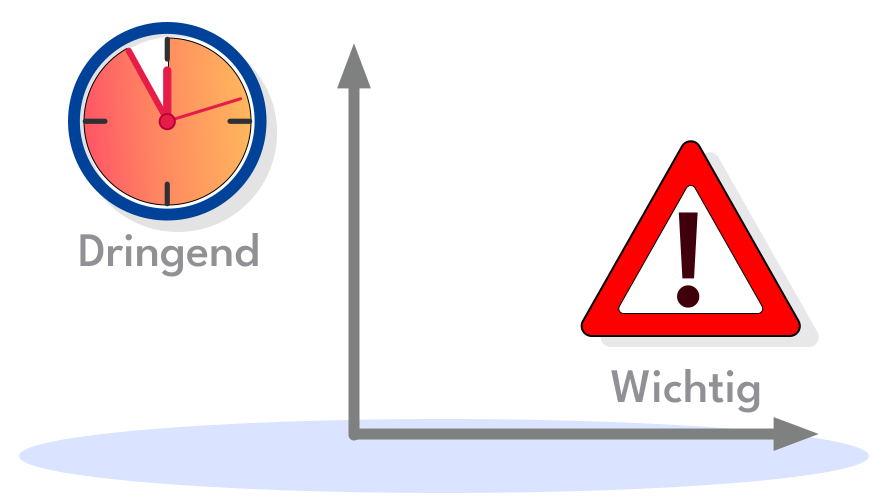
At first glance, the terms “urgent” and “important” seem to mean much the same thing. On closer inspection, however, there are significant differences that come into play when working with the Eisenhower Matrix. A key factor is the value delivered by a completed task.
Urgent tasks are usually highly visible because their due date is in the near future or has already passed. Their value drops quickly if they are delivered after the deadline. There is a trap here: while importance can often be inferred from urgency, the reverse is not true. An unimportant task does not become important simply because it is due tomorrow.
Important tasks contribute to value creation — that is, they have significant benefit. It is possible that their value declines only slowly when completed late. The consequences of late delivery on such items therefore only become visible after some time. Important tasks that are not simultaneously urgent are easily postponed or forgotten.
Urgent: How much time is left until the deadline?
Important: What value does on-time delivery create? Or conversely, what damage is caused by late delivery?
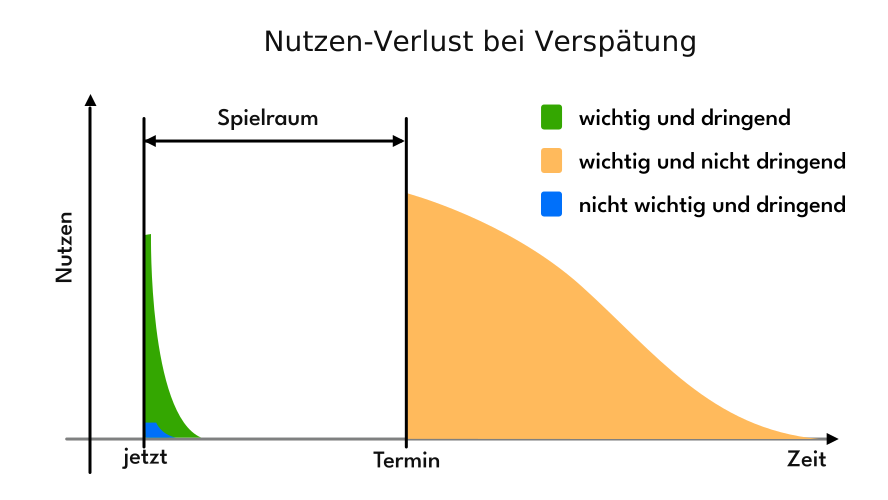
Urgent tasks demand immediate attention and have clear consequences if not completed on time. Postponing these tasks increases stress and can ultimately lead to burnout.
Examples of urgent tasks:
- Unplanned visit from an important investor: A significant investor spontaneously announces a visit to your office to get an overview of current projects. Immediate preparation and coordination are required to make a good impression.
- Sudden weather event at an outdoor event: During an important outdoor event, a storm unexpectedly rolls in. Immediate decisions must be made to secure the event, inform attendees, and implement alternative plans.
- Critical software bug before a live webinar: Shortly before a major webinar attended by hundreds of participants, a serious bug is discovered in the software being used. The problem must be fixed immediately to ensure the webinar runs smoothly.
Important tasks do not necessarily require immediate attention. They do, however, contribute to achieving your large, long-term goals. Their lower urgency does not diminish their significance. Plan these tasks carefully to use your resources efficiently.
Examples of important tasks:
- Developing a long-term growth strategy: Creating a plan for expanding into new markets or diversifying the product portfolio. This task is critical for the company’s future growth and requires thorough planning and analysis.
- Mentoring a promising employee: Regular meetings to develop a talented employee who could take on a key role in the company in the future. This investment in employee development is important for the company’s long-term success.
- Implementing a new IT system: Introducing a new IT system that improves the efficiency of internal processes. Even though there may be no immediate pressure, a successful rollout is crucial for the company’s future performance.
You can now sort your tasks into the four quadrants of the Eisenhower Matrix.
How It Works: The 4 Quadrants of the Eisenhower Matrix
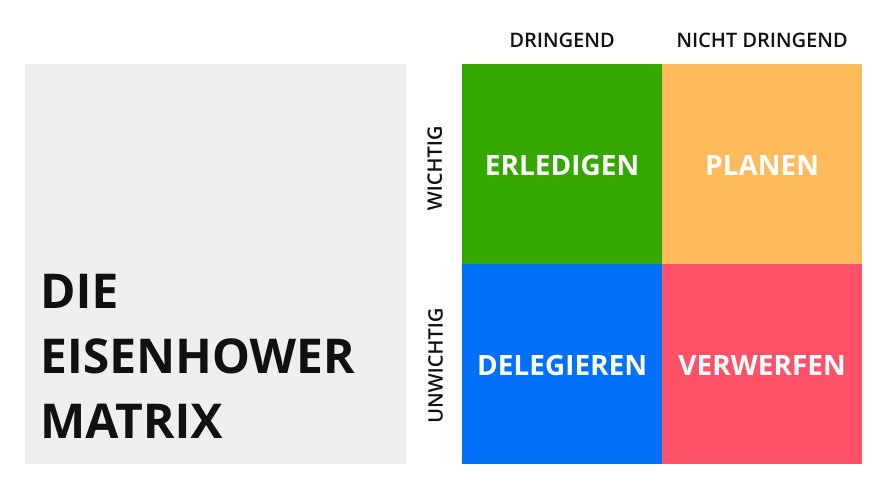
With the help of the Eisenhower Matrix, you can structure a long to-do list so that you keep track of everything. In the best case, you can filter out many tasks that no longer need your attention. In practice, a good project management software tool is best suited for this. The Eisenhower Matrix provides for four task categories:
- A-tasks: important and urgent — do immediately
- B-tasks: important and not urgent — schedule
- C-tasks: not important and urgent — delegate
- D-tasks: not important and not urgent — eliminate
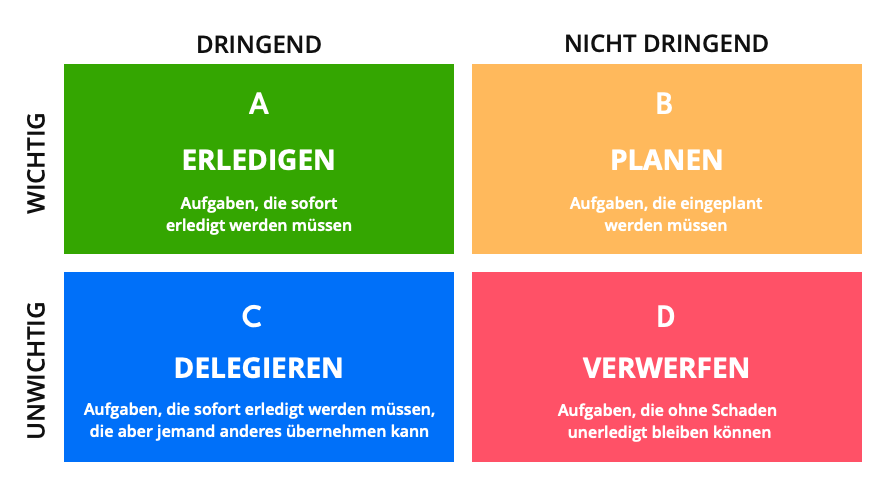
- A-tasks: Do
Quadrant one, the “Do” quadrant, includes all A-tasks — those that are both urgent and important. These tasks must be completed immediately because they have clear consequences and a direct impact on your long-term goals. Tasks in this quadrant are often the most stressful and carry high significance for the company or its projects. Focus on these first, as they cannot be postponed. - B-tasks: Schedule
Quadrant two is the “Schedule” quadrant, where B-tasks are placed — tasks that are important but not urgent. These tasks relate to your long-term goals, such as professional development or introducing a new development process. They are high-value and can be planned for later. They should be addressed after the tasks in the first quadrant. Time management strategies such as the Pareto principle or the Pomodoro technique can help tackle these tasks efficiently. - C-tasks: Delegate
Quadrant three is the “Delegate” quadrant for C-tasks, which are urgent but not important. These tasks require immediate completion but have no impact on your long-term goals. Because they do not require your particular skills, you can delegate them to team members. - D-tasks: Discard
The remaining tasks are neither urgent nor important. Working on them brings you no closer to your goals. Spending significant time on these tasks could be called a waste of time. You should discard them — even though they are often things that come easily and feel pleasant.
Goals of the Eisenhower Method
One of the most important duties of a manager is prioritizing tasks — both their own and those they assign to employees. Prioritization results in a work order for each employee.
The goal and function of the Eisenhower Method is to effectively prioritize and manage tasks in order to use time efficiently and boost productivity. By categorizing tasks according to urgency and importance, the method helps you focus on truly decisive activities, eliminate unimportant tasks, and organize your working day more effectively. This leads to reduced stress and better decision-making by keeping the focus on what really matters.
Eisenhower Principle: Practical Examples
To help you understand which tasks belong in each quadrant of your Eisenhower Matrix, we have compiled some practical examples of the Eisenhower Principle.
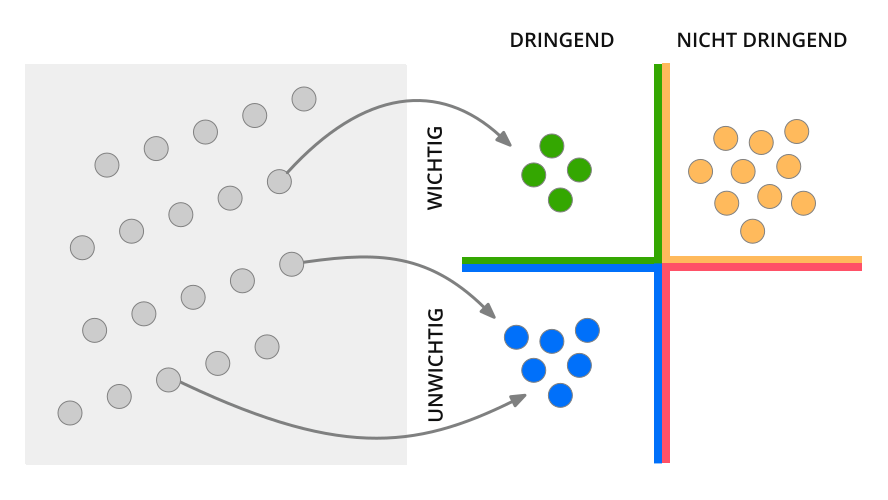
Important and urgent (do immediately)
- Project deadline today: An important project must be completed by end of day, or you will miss the deadline.
- Server outage: Your company’s main server has gone down, and it is critical to bring it back online immediately to maintain business operations.
- Team member falls ill: A team member working on an important project is suddenly sick, and it is urgently necessary to redistribute their tasks to ensure project progress.
Important but not urgent (schedule)
- Long-term strategy development: Drawing up a new plan for expanding into new markets, which is important in the long run but does not need to be implemented right away.
- Training and development: Attending a training course or workshop that is important for your professional growth but has no immediate impact on your current projects.
- Building your network: Establishing and maintaining professional contacts that are important for your long-term career development but are not immediately required.
Urgent but not important (delegate)
- Answering routine emails: Emails that need to be answered promptly but have no strategic significance.
- Creating routine reports: Regular reports that must be produced but do not influence any major decisions.
- Coordinating meeting times: Organizing meeting appointments — something that needs to be done but does not require your direct attention and can be delegated.
Neither urgent nor important (eliminate or postpone)
- Checking social media: Time spent on social networks that is neither urgent nor important.
- Unnecessary meetings: Meetings that offer no direct added value for your current projects or tasks.
- Browsing through advertisements: Consuming advertising or other entertainment content that has no relevance to your work.
This matrix helps you prioritize your tasks more effectively and work more efficiently. And remember: it is best to maintain separate matrices for work and personal life. This way you can work through your to-do lists using the methods best suited to the time and place.
Further Time Management Methods
Alternative Time Management Methods
In addition to the Eisenhower Matrix, there are several other time management methods:
Selection of Tools
The Eisenhower Matrix is supported in one form or another by many project management tools and task management systems. Here is a small selection in alphabetical order:
Frequently Asked Questions
How does the Eisenhower Matrix work?
The Eisenhower Matrix is an effective technique from project and time management for prioritizing tasks. It sorts tasks by importance and urgency to ensure meaningful structuring. Using this method, tasks can be evaluated and organized efficiently. Use the Eisenhower Matrix to increase your productivity and direct your focus to the most important tasks.
What is the Eisenhower Matrix?
The Eisenhower Matrix is a systematic method for prioritizing tasks based on their urgency and importance. It allows you to organize tasks effectively and make optimal use of your time. It helps to boost productivity and avoid overload.
Why the Eisenhower Matrix?
The Eisenhower Matrix is named after Dwight D. Eisenhower, the 34th President of the United States, and serves as a method for improving time management. It divides task lists into four quadrants based on urgency and importance, enabling effective prioritization. With the Eisenhower Matrix, you can organize tasks efficiently and focus on the most important activities.
What are the weaknesses of the Eisenhower Principle?
The Eisenhower Principle has some drawbacks. It neglects the complexity of certain tasks and the time and resource costs involved. In practice, urgent tasks are often prioritized — especially in client projects or under tight deadlines. As a result, the principle can limit task prioritization in complex scenarios.

Editor and Writer
Gabriella Martin is a Yale University graduate and holds a Master's degree in German Literature from the University of Tübingen. She loves explaining complex things in simple terms.