What Are Project Goals?
Before a ship leaves port, the destination has already been set. This lets passengers decide whether they want to come along, and lets the crew make the necessary preparations to reach the destination safely. A project works much the same way: anyone who wants to define project goals must first understand what makes a good goal — and why no initiative should start without clear goals.
A project goal is the unambiguous, complete, and verifiable description of the state that the project is intended to bring about. It defines not the journey, but the destination. Not the activities, but the result.
Project goals are developed at the start of an initiative — ideally together with the key stakeholders. They are a fixed part of the project charter and give the entire team a clear picture of what it is working toward.
An important distinction: project goals are not the same as corporate goals. A corporate goal such as “become market leader” is strategic and long-term. A project goal such as “implement CRM system by Q3” is concrete, time-limited, and directly actionable. Project goals are building blocks that contribute to higher-level corporate goals.
Why Are Project Goals So Important?
Projects rarely fail because of missing budget or inadequate technology. They fail because of unclear goals. When no one knows exactly what needs to be achieved, everyone works in a different direction — and in the end nothing fits together.
Clear project goals accomplish several things at once:
They provide direction. Every team member knows what they are working toward. Decisions can be measured against the goals: Does this bring us closer to the goal — or not?
They create commitment. A documented goal is a promise. It defines what will be delivered, by when, and at what level of quality. This creates clarity for clients, stakeholders, and the team itself.
They enable measuring success. Without a goal, it is impossible to judge at the end whether the project was successful. Was the new website a success? That depends on what was defined as a goal beforehand — more traffic, better conversion, shorter load times?
They motivate. People work more enthusiastically when they know what they are working for. A clearly formulated goal gives meaning to daily work and makes progress visible.
They prevent scope creep. When goals are fixed, every new requirement can be measured against them: Does this fall within the agreed scope — or is it an expansion that needs to be renegotiated?
Types of Project Goals
Scope Goals, Schedule Goals, and Cost Goals
The project management triangle describes three goal dimensions that interact in every project:
- Scope goals (performance): What should be achieved? What results, quality, and scope must the project deliver?
- Schedule goals (time): By when should the result be available? What milestones and deadlines apply?
- Cost goals (budget): What financial resources are available? What budget ceiling must not be exceeded?
The three dimensions are interdependent. If the scope of deliverables is expanded, time and costs generally increase as well. If the budget is cut, either the scope must be reduced or the deadline must be pushed back. Good project goals take all three factors into account and make priorities transparent.
Strategic and Operational Goals
Not every project goal sits at the same level. It is worth distinguishing between two tiers:
Strategic goals answer the question: Why is this project being carried out? They describe the benefit the organization derives from the project — for example, “increase customer satisfaction” or “expand market share in southern Germany.”
Operational goals answer the question: What exactly does the project deliver? They describe concrete results — for example, “New CRM system with self-service portal is live by 30 September” or “Onboarding process is shortened from 14 to 5 days.”
Strategic goals provide the context; operational goals provide the measurability. Both belong together.
Must-Goals and Nice-to-Have Goals
In practice, project goals can be classified by how binding they are:
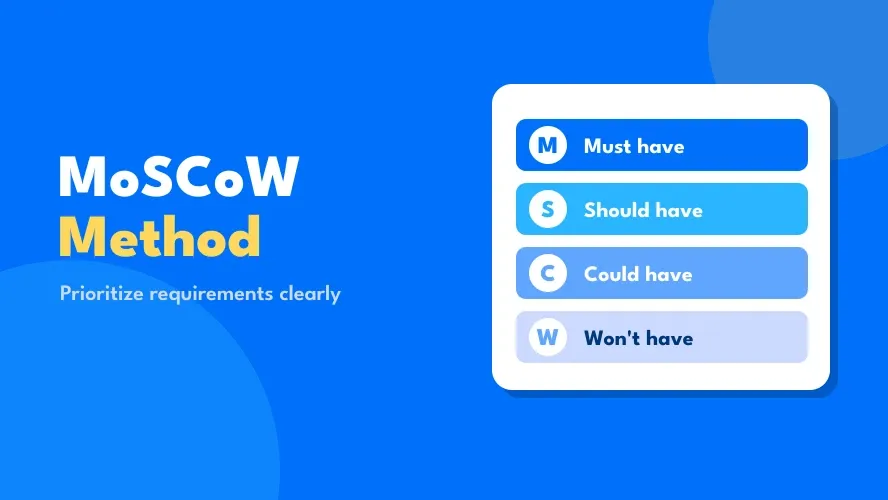
Must-goals are non-negotiable. If they are not achieved, the project is considered to have failed. Example: “The system meets all GDPR requirements.”
Nice-to-have goals (also called wish goals) are desirable but not mandatory. When resources are tight, they are deprioritized. Example: “The dashboard additionally supports a dark mode.”
This distinction is especially helpful when priorities need to be set — and in almost every project, they do.
Formulating Project Goals: Methods and Tips
The SMART Method
The most proven method for formulating goals is the SMART method. It ensures that goals do not remain vague statements of intent but become verifiable.
| Criterion | Meaning | Example |
|---|---|---|
| Specific | The goal describes a concrete state, not a vague intention. | "The website has a new homepage with four customer stories" instead of "The website should get better" |
| Measurable | Achievement can be verified qualitatively or quantitatively. | "Load time is under 2 seconds" instead of "The page is fast" |
| Attractive | The goal is relevant and accepted by all involved parties. | Developed together with the team, not dictated from above |
| Realistic | The goal is achievable with the available resources. | Budget, team size, and timeframe match the scope |
| Time-bound | There is a clear deadline. | "By 30 September" instead of "as soon as possible" |
SMART goals are especially well suited to the early project phases, when rough ideas need to be turned into binding commitments.
Five Tips for Clear Project Goals
-
Involve stakeholders. Those who develop the goals together understand them better and support them. The stakeholder analysis shows who should be involved.
-
Formulate positively and in the present tense. Describe the target state, not the activity. “The new website is published” instead of “We need to revise the website.”
-
Keep it short and concise. A project goal fits in one to two sentences. Longer descriptions belong in the project documentation, not in the goal statement.
-
Review and adjust regularly. Project goals are not set in stone. Conditions change, and goals must keep pace. Check at every milestone whether the goals are still current.
-
Put it in writing. What is not documented does not exist. Record your goals in the project charter or project plan so that all parties can access them at any time.
Recognizing and Resolving Goal Conflicts
Project goals rarely exist in isolation. When multiple goals are pursued simultaneously, conflicts can arise — and that is not the exception but the rule.
A goal conflict occurs when achieving one goal makes it harder or impossible to achieve another. The classic example comes from the project management triangle: a larger feature scope means more time and higher costs. An earlier delivery date often comes at the expense of quality.
Goal relationships can be classified into three categories:
| Relationship | Meaning | Example |
|---|---|---|
| Complementary | The goals support each other. | Better usability → higher customer satisfaction |
| Neutral | The goals do not influence each other. | New logo → server migration |
| Competing | Achieving one goal hinders the other. | Maximum feature scope ↔ meeting the deadline |
Competing goals cannot be eliminated — but they can be managed. Three approaches help in practice:
- Prioritization: Which goal takes precedence? Must-goals trump nice-to-have goals.
- Transparency: Name conflicts openly rather than sweeping them under the rug. The client needs to know that not everything is possible at the same time.
- Drive a decision: In the end, someone must decide. Usually that is the client or the steering committee.
Formulating Project Goals: Examples
Theory is one thing, practice another. The following table shows typical goal formulations — and how they can be improved.
| Poorly formulated | Problem | Better formulated |
|---|---|---|
| "Develop new app" | Not specific, not time-bound, not measurable | "The app with booking and payment features is published in the App Store by 30 June." |
| "Improve customer satisfaction" | Not measurable, no timeframe | "The NPS score rises from 35 to 50 by Q4." |
| "Make website faster" | Vague, no concrete target value | "The homepage load time is under 2 seconds by end of March." |
| "Increase sustainability" | Unclear term, not time-bound | "By Q2, operational waste is reduced by 10% and the recycling share is raised to 20%." |
| "Publish new homepage" | Missing specificity and deadline | "By 30 September, the updated website with four new customer stories is published." |
The pattern is always the same: good goals describe a concrete state, are measurable, and have a deadline. They answer the question: What is achieved by when?
Managing Project Goals in Practice
Clearly formulated goals are of little use if they end up in a drawer. Three approaches have proven effective in practice:
Document in the project charter. Project goals belong in the project charter — the central document that all parties refer to. This is where they are binding and accessible to everyone.
Record in project management software. Modern PM tools make it possible to capture goals directly in the project description and break sub-goals down to the level of individual work packages. This makes progress against goals measurable — not just at the end, but on an ongoing basis.
Review at milestones. Every milestone is a natural checkpoint: Are we on track? Do the goals still apply? Do we need to adjust course? Asking these questions regularly prevents nasty surprises at the end of the project.
Frequently Asked Questions
What exactly is a project goal?
A project goal describes the target state that a project should have achieved upon successful completion. It defines what will be delivered by when, at what quality, and within what budget. Project goals are part of the project charter and give the team direction throughout the entire initiative.
What role do project goals play in project success?
Clear project goals provide direction, create commitment, enable measuring success, and motivate the team. Without defined goals, there is no basis for judging at the end whether a project was successful — and no benchmark for decisions during execution.
How do you formulate project goals correctly?
Best done with the SMART method: goals must be specific, measurable, attractive, realistic, and time-bound. Formulate positively and in the present tense — describe the target state, not the activity. “The new website is published by 30 September” instead of “We need to revise the website.”
What is the difference between project goals and corporate goals?
Corporate goals are strategic and long-term — for example, “become market leader in the DACH region.” Project goals are time-limited, concrete, and project-specific — for example, “implement CRM system by Q3.” Project goals contribute to corporate goals but are formulated and verifiable independently.
How do you deal with goal conflicts?
Goal conflicts arise when achieving one goal makes another more difficult — for example, a larger feature scope within the same budget and timeline. They can be managed through prioritization (must-goals vs. nice-to-have goals), open communication about the conflicts, and a clear decision by the client or steering committee.

Senior Advisor
Jörg Friedrich is the original author of the project management software Allegra and continues to accompany its development to this day. He has many years of industry experience as a project and department manager. He also serves as a professor in the Faculty of Computer Science and Information Technology at Esslingen University of Applied Sciences.