What Is the Project Management Triangle?
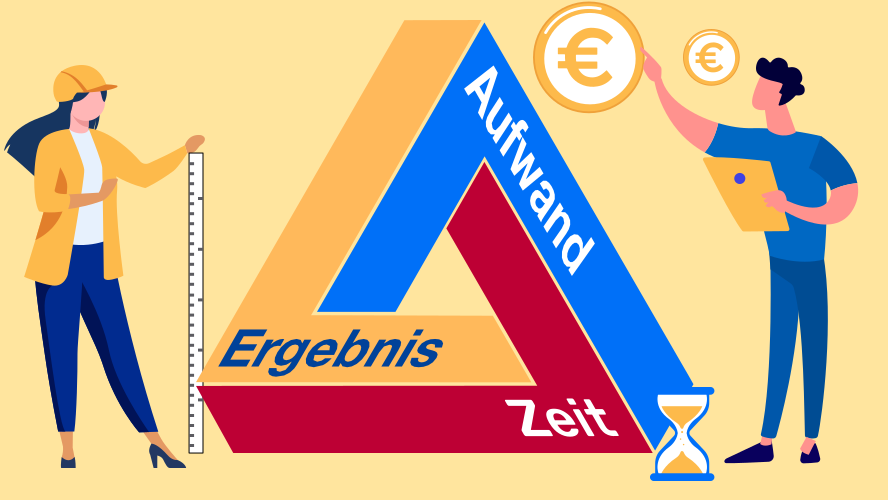
The project management triangle — also known as the “Iron Triangle” or “Triple Constraint Model” — is a tool that project managers use to visualize three important competing targets of a project:
- Scope (also: deliverable scope, outcome, scope, quality)
- Cost (also: effort)
- Time (also: duration, deadlines)
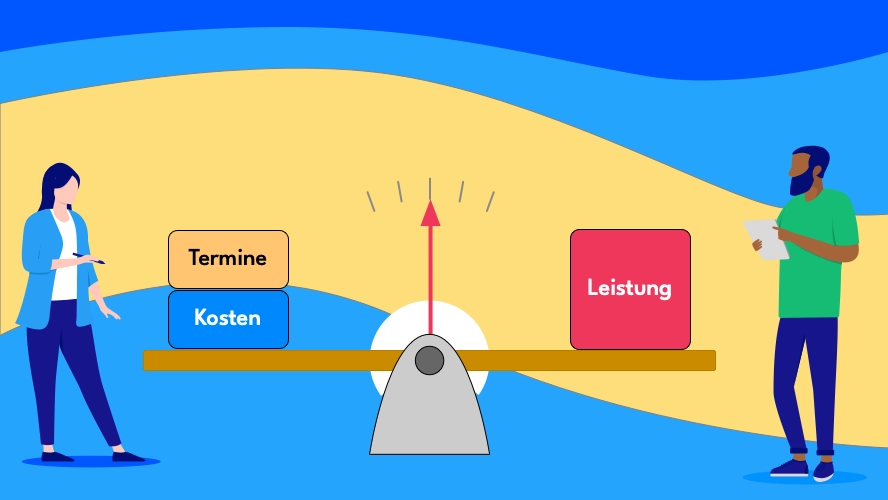
Changes to one target affect the other two. If the project budget is cut, for example, it is difficult to do so without making concessions on the scope of delivery. If the delivery date is moved forward, this almost always affects the quality of the results.
One of a project manager’s main tasks is therefore to achieve — as far as possible — the goals defined by the project management triangle, namely to deliver
- the desired outcome
- within the planned timeframe
- within the planned costs.
Project managers strive to meet stakeholder expectations. The project management triangle helps keep those expectations within a realistic framework. It is therefore important that all project stakeholders have a clear understanding of the relationships described by this model. The project management triangle relates the three project dimensions
- Scope
- Time
- Cost
to one another. Scope is generally proportional to time and cost, while time is often inversely proportional to cost — meaning a shorter deadline comes with greater effort.
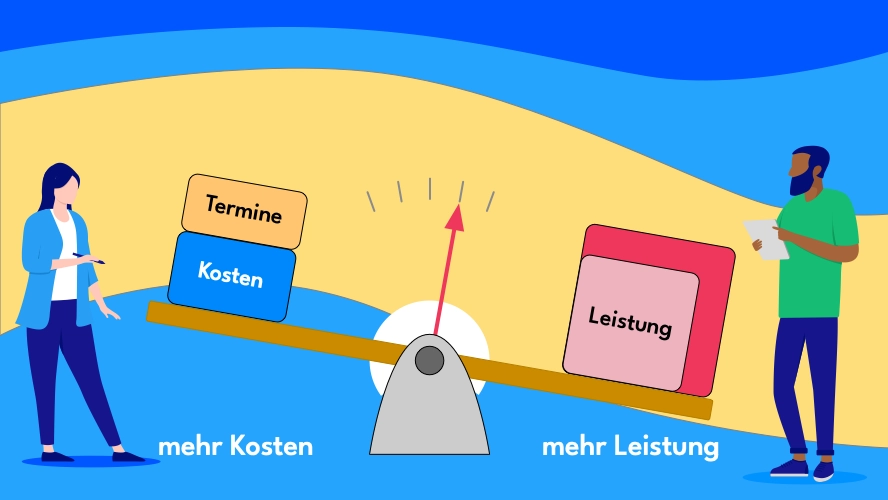
If the customer wants to add new features and thereby increase the scope, the project duration and budget will likely also need to increase to handle the additional effort. A careful effort estimation helps to assess the impact realistically.
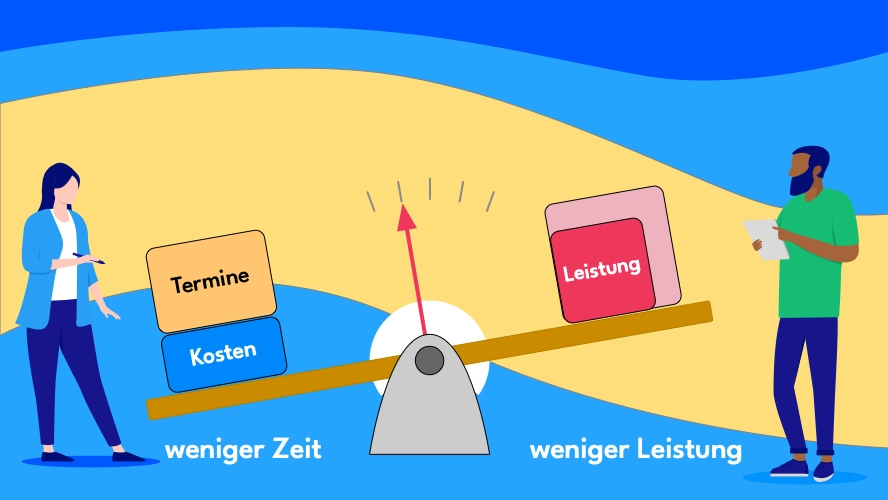
If, on the other hand, costs need to be reduced, this may result in longer delivery times — for example, because expensive specialists must be replaced. Capacity planning can help make the best use of available resources.
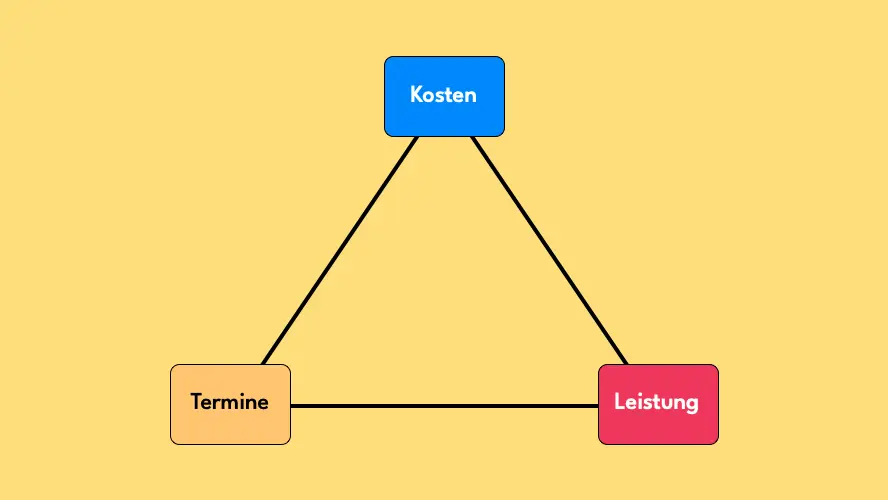
If the delivery deadline is shortened, more money may be needed for specialized equipment or additional staff.
The project management triangle is a model for illustrating the dependencies among the three dimensions mentioned above. It therefore has no implementation in any project management tools. It is useful to have these relationships clearly in mind when creating or updating a project plan.
Now let’s take a closer look at the three variables. We’ll start with what is arguably the most important dimension of the project management triangle: scope.
The Three Dimensions of the Project Management Triangle
The project management triangle describes the three central factors that influence every project:
- Time: How much time do you have available for the project?
- Cost: How much budget can you use?
- Quality: How high should the quality of the end product be?
The interesting part: these three factors are inseparably linked. If one of them changes, it automatically affects the other two. For example, if you want to increase quality, you’ll need either more time or more money — often both.
Visualizing the Project Management Triangle
Imagine an equilateral triangle. Each side represents one of the dimensions. The goal? To keep the triangle in balance. That sounds simple, but it is often a real challenge — and that is precisely what makes project management exciting!
The Interactions Within the Project Management Triangle
The Reality of Project Work
In theory, all of this sounds wonderful. But reality often looks different:
- The customer demands higher quality — without additional budget or more time.
- The team runs into unexpected obstacles, and the schedule starts to slip.
- The budget is cut, and you have to make concessions on quality.
The Typical Pitfalls
- Time pressure: Everyone wants to complete their project as quickly as possible. But speed comes at a price.
- Budget cuts: A tight budget often means you have to find creative solutions — sometimes at the expense of quality.
- Quality expectations: Perfection is wonderful, but not always realistic.
Using the Project Management Triangle
For Beginners: Set Priorities Correctly
If you are new to project management, the project management triangle can feel overwhelming. But here is the key: Set priorities!
- Ask yourself: What matters most for this project — time, cost, or quality?
- Communicate clearly: Make sure everyone involved — from the customer to the team — knows where the focus lies.
For Experienced Managers: Optimize Rather Than Juggle
For experienced project managers, the challenge is often about fine-tuning the balance. Here are some advanced techniques:
- Stakeholder management: Clarify the expectations of all stakeholders early on.
- Use tools: Gantt charts, Earned Value analyses, or project management tools like Allegra can help visualize and manage the balance.
The Project Management Triangle in Agile Projects
Classic vs. Agile: Where the Triangle Becomes Flexible
In classic projects, the project management triangle is often rigid — everything is planned from the very beginning. In agile projects, however, it stays flexible, because the team works iteratively and requirements can change.
Hybrid Models: The Best of Both Worlds
A mix of classic and agile approaches can help make optimal use of the project management triangle. For example, you plan the broad milestones in a classic way, but leave room for agile iterations at the intermediate stages. You can find an overview of classic and agile approaches in our article on project management methods.
Frequently Asked Questions
What is the project management triangle?
The project management triangle describes the three central aspects that influence project success: time, cost, and quality/performance. If one of these aspects changes (e.g., a longer project duration), it affects the others (e.g., higher costs or reduced quality). The model helps project managers find a balance between these factors to achieve the project goal while using resources efficiently. It thus serves as a guideline for setting priorities.
What are the goal conflicts in the project management triangle?
In project management, the three factors — time, cost, and quality/performance — exist in tension with one another. The model illustrates that you cannot optimize one of these aspects without negatively affecting the others.

CEO Alltena GmbH
Christoph Friedrich is a computer scientist and certified Project Management Professional. He has extensive experience in the introduction and integration of project management tools as well as the analysis and definition of processes in project and service management.